
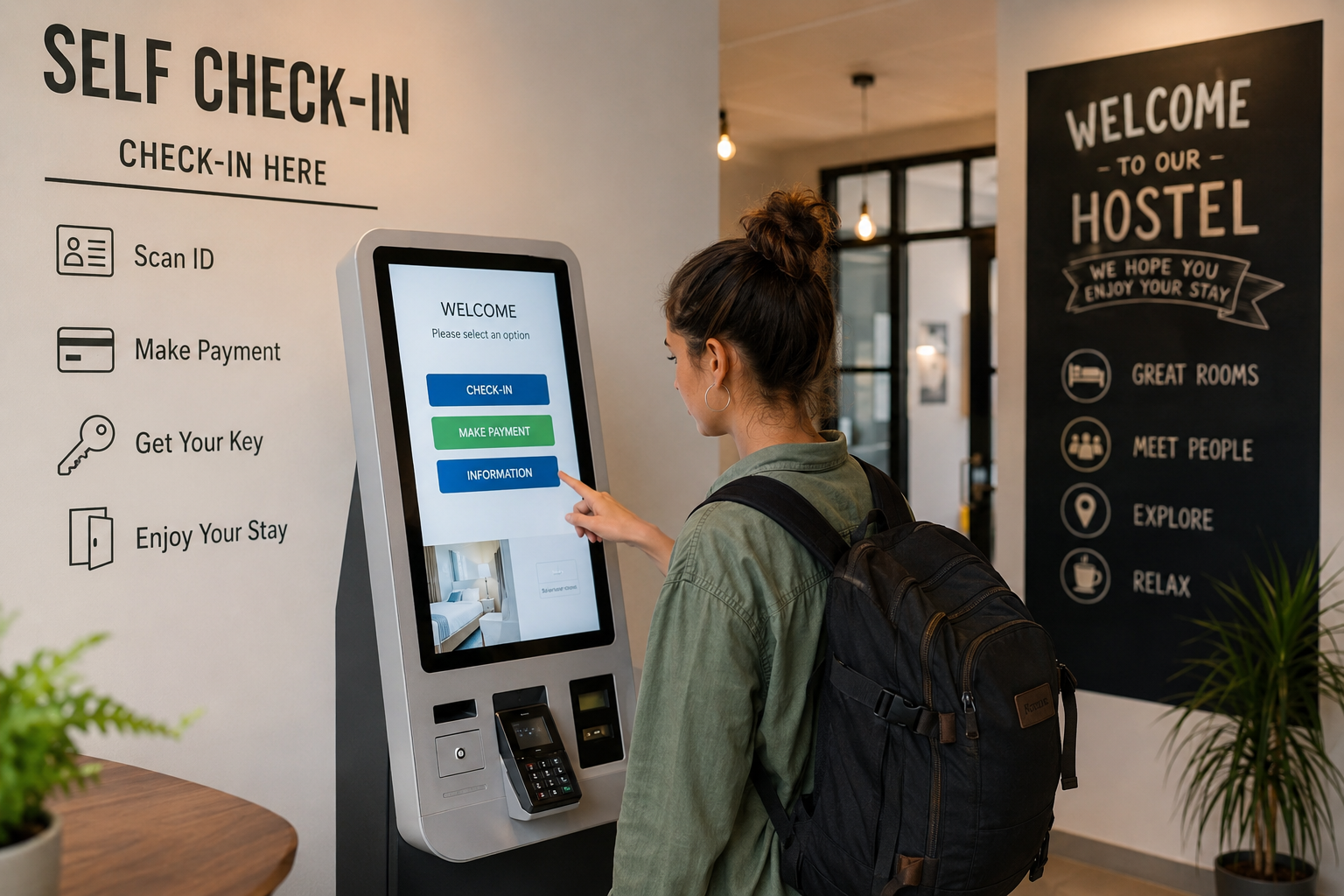
Self Check-In Systems for Hostels
The hostel industry continues to evolve as travelers increasingly expect convenience, flexibility, and seamless digital experiences. One of the most significant innovations shaping modern hostel operations is the adoption of self check-in systems. These technologies allow guests to complete the arrival process independently, reducing wait times, improving operational efficiency, and enhancing the overall guest experience.
As labor costs rise and travelers seek greater autonomy, self check-in systems for hostels have become a valuable investment for properties of all sizes.
What Are Self Check-In Systems?
Self check-in systems enable guests to access their accommodation without requiring direct interaction with front desk staff. These systems typically combine digital booking confirmations, online registration forms, electronic key delivery, smart locks, access codes, or mobile applications.
Upon completing a reservation, guests receive instructions that guide them through the arrival process. Depending on the hostel’s setup, they may receive a door code, digital key, QR code, or locker access credentials before arrival.
This technology allows travelers to check in at any hour, making it particularly useful for international backpackers arriving on late-night flights or delayed transportation schedules.
Benefits of Self Check-In Systems for Hostels
• Improved guest convenience: Guests can arrive according to their own schedules without worrying about reception hours.
• Increased operational efficiency: Staff can focus on guest engagement, housekeeping, and community-building instead of repetitive check-in tasks.
• Reduced labor costs: Overnight reception coverage can be minimized while maintaining secure access.
• Faster arrival process: Registration completed before arrival shortens wait times and improves first impressions.
• Enhanced security: Smart locks, digital codes, and ID verification reduce risks associated with lost keys or unauthorized access.
Key Features to Look For
When evaluating self check-in systems, hostel operators should prioritize solutions that offer:
• Mobile-friendly registration
• Digital signature collection
• Smart lock integration
• Automated guest messaging
• Secure payment processing
• Passport and ID verification
• Multi-language support
• Property management integration
• Real-time access management
A comprehensive platform should simplify both guest experiences and back-office operations.
Challenges and Considerations
Although self check-in offers numerous benefits, implementation requires careful planning. Not all guests are comfortable with fully automated processes, particularly older travelers or those unfamiliar with digital technologies.
Many successful hostels adopt a hybrid approach, combining self-service options with staff availability during peak hours. This balance preserves the social and welcoming atmosphere hostels are known for while leveraging the efficiencies of automation.
Reliable internet connectivity and secure infrastructure are also essential. System failures can negatively impact guest experiences if backup procedures are not in place.
SEO and AEO Visibility
To maximize visibility across search engines and AI-driven platforms, hostel owners should:
• Use structured data to highlight check-in options.
• Incorporate voice search optimization since travelers increasingly use smart assistants.
• Publish content around travel convenience and digital hospitality trends.
• Ensure mobile-friendly websites that showcase self check-in features prominently.
The Future of Hostel Check-In
The future of hostel operations is increasingly digital. Artificial intelligence, biometric verification, mobile applications, and smart building technologies are expected to further enhance self check-in capabilities.
As travelers continue to prioritize convenience and flexibility, self check-in systems will likely become a standard feature rather than a competitive advantage. For hostel owners and operators, investing in this technology is not simply about automation—it is about creating a smoother guest journey, improving operational performance, and positioning the property for long-term success in an increasingly digital travel landscape.

