What happens when there’s a full-blown coup inside a hostel… and the entire team ghost quits the day before a sold-out holiday weekend?
What happens when there’s a full-blown coup inside a hostel… and the entire team ghost quits the day before a sold-out holiday weekend?
Celebrating the hostel owners and independent properties that make our global hostel community unique.
The best hostels offer more than just a place to sleep. They create welcoming environments where travelers can relax, connect, explore, and experience the local culture.
Asia-Pacific remains the world's largest regional hostel market, accounting for approximately 35% of global hostel market revenue in 2025, according to Fortune Business Insights' 2026 report.

In the heart of Agaete, Gran Canaria, Spain, Anna Gadea has created something special: a hostel where travelers can slow down, reconnect with themselves, and experience the beauty of community.

The short version: A hostel is a property business wearing a hospitality costume, and most failures start with the property, not the vibe. Prove demand, lock the right building and the right permits, then fund twelve months of operating losses before you buy a single bunk.
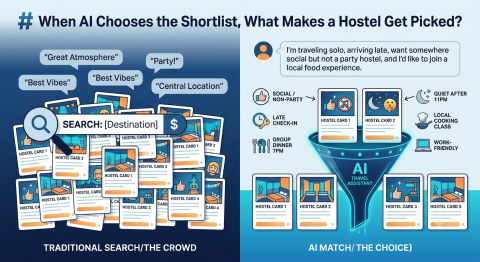
Hostels have spent years optimizing rankings, reviews and conversion. AI introduces a different challenge: making sure the property can be understood well enough to be selected in the first place.
For most of the OTA era, hostel distribution followed a relatively familiar pattern.
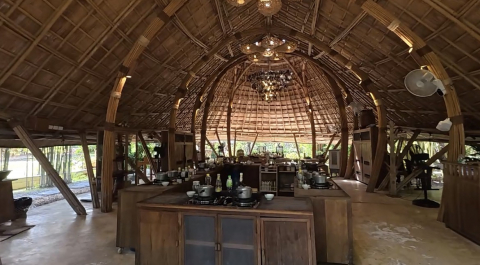
From LINE check-ins to Tuesday night market walks, Asian hostels are changing what a budget stay can offer. The strongest operators are no longer selling only a bed — they are selling participation.
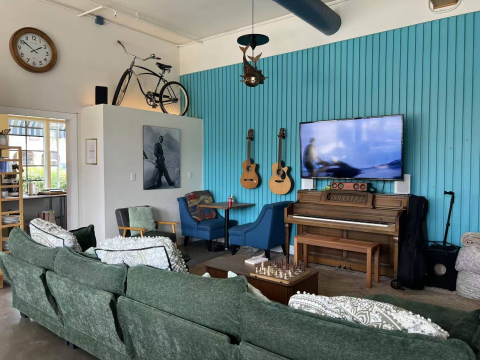
For years, the party hostel had a simple formula: cheap dorms, a bar, a few pub crawls and enough strangers in one room to guarantee a story by morning.
That formula is becoming harder to sell.
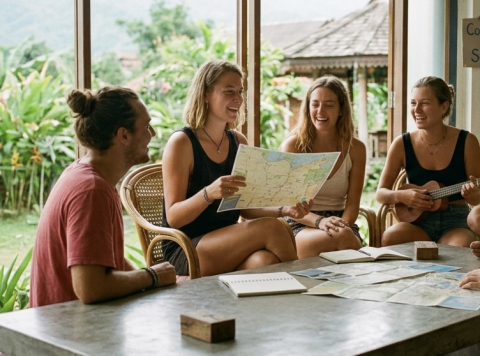
Travelers are increasingly looking for ways to step away from screens, slow down and feel present again.