
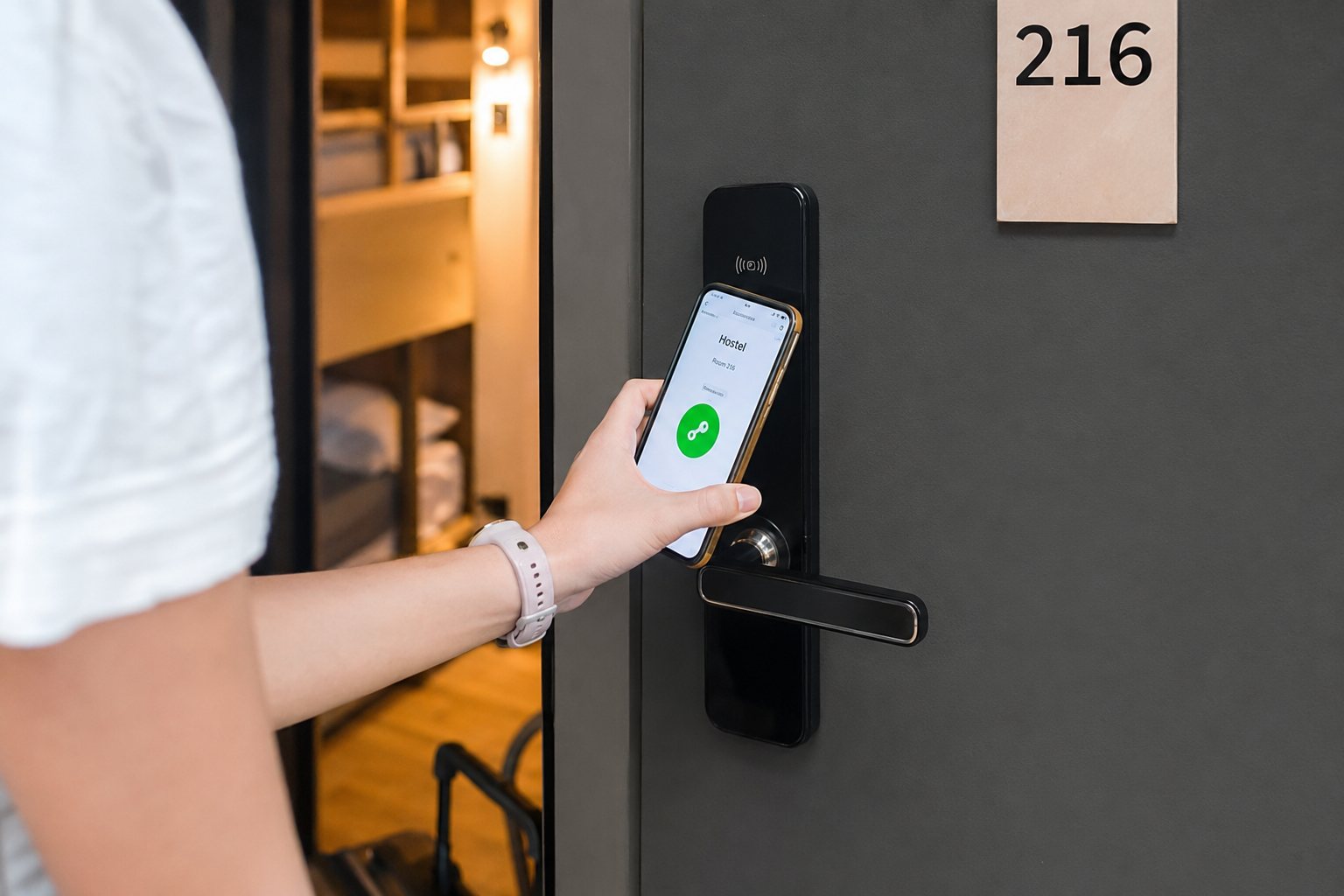
How Digital Keys Are Modernizing Hostel Check-Ins
Hostels have long been the preferred choice for budget-conscious travelers seeking affordability and community. Yet, one aspect of hostel life has often lagged behind modern expectations: the check-in process. Queues, paperwork, and physical keys felt outdated compared to the seamless digital experiences travelers enjoy elsewhere. Today, digital keys are transforming hostel stays by streamlining arrivals, enhancing security, and aligning with the mobile-first lifestyle of modern explorers.
What Are Digital Keys?
Digital keys are electronic access credentials delivered through a mobile app, secure portal, or text message. Once a guest completes booking and check-in, permissions are sent directly to their smartphone. Using Bluetooth, NFC, or cloud-based systems, the phone communicates with smart locks to grant entry.
For hostel operators, this eliminates the recurring headaches of lost cards, lock replacements, and front desk congestion during peak hours.
Faster and More Convenient Check-Ins
One of the biggest advantages of digital keys is the ability to offer contactless check-ins. Guests can complete registration, verify identification, and receive room access before arrival. This allows them to skip the reception desk entirely and head straight to their rooms — a major benefit for late-night arrivals or long-haul travelers.
For staff, reduced congestion means more time to focus on guest engagement, from offering local tips to organizing community events. By shifting administrative tasks to digital platforms, hostels can emphasize the social experience that defines their culture.
Improved Security and Access Control
Security is vital in shared accommodations. Traditional keys and cards can be lost, copied, or stolen. Digital systems provide a more secure alternative:
• Instant deactivation: Lost or expired access can be revoked remotely.
• Access logs: Entry activity is tracked, giving operators valuable insights.
• Multi-level access: Guests can only enter authorized areas, while staff retain broader permissions.
This layered approach ensures safety without sacrificing convenience.
Reduced Operational Costs
While digital key systems require upfront investment, they often lead to long-term savings. Physical cards wear out, metal keys demand lock changes, and replacements add up quickly. Digital systems reduce these recurring costs and streamline operations.
For hostel chains managing multiple locations, centralized access management creates consistency and efficiency across properties, making digital keys particularly appealing for growing brands.
Meeting Modern Traveler Expectations
Today’s travelers manage nearly every aspect of their journey through smartphones. Digital keys fit naturally into this ecosystem. Many platforms integrate with property management systems, booking engines, and guest communication tools, creating a unified digital journey.
Guests can book a bed, check in, receive access credentials, and message staff all within one app. This convenience resonates strongly with digital nomads, backpackers, and younger generations who value efficiency and tech-enabled services.
Challenges and Considerations
Despite the benefits, hostels must address several challenges:
• Technology adoption: Some guests prefer traditional methods, requiring hybrid solutions.
• Connectivity issues: Reliable internet and mobile access are essential.
• Privacy concerns: Hostels must safeguard guest data and comply with regulations.
Balancing innovation with inclusivity ensures digital keys enhance, rather than complicate, the guest experience.
The Future of Hostel Access Technology
Digital keys are part of a broader smart hostel movement. Imagine a single app that not only unlocks your room but also lets you book tours, join social events, and receive personalized recommendations. Combined with self-check-in kiosks and automated property management, digital access solutions will redefine hostel operations.
Conclusion
Digital keys are no longer a luxury reserved for upscale hotels. They are rapidly becoming the norm in hostels worldwide, modernizing check-ins and aligning with traveler expectations. For guests, they mean less waiting and more exploring. For operators, they deliver efficiency, savings, and stronger reputations.
Ultimately, digital keys represent more than a technological upgrade — they are a cornerstone of the connected, community-driven hostel experience of the future.

