
How One Hostel Owner Scaled a Single Rental Property Into a Successful Hospitality Group
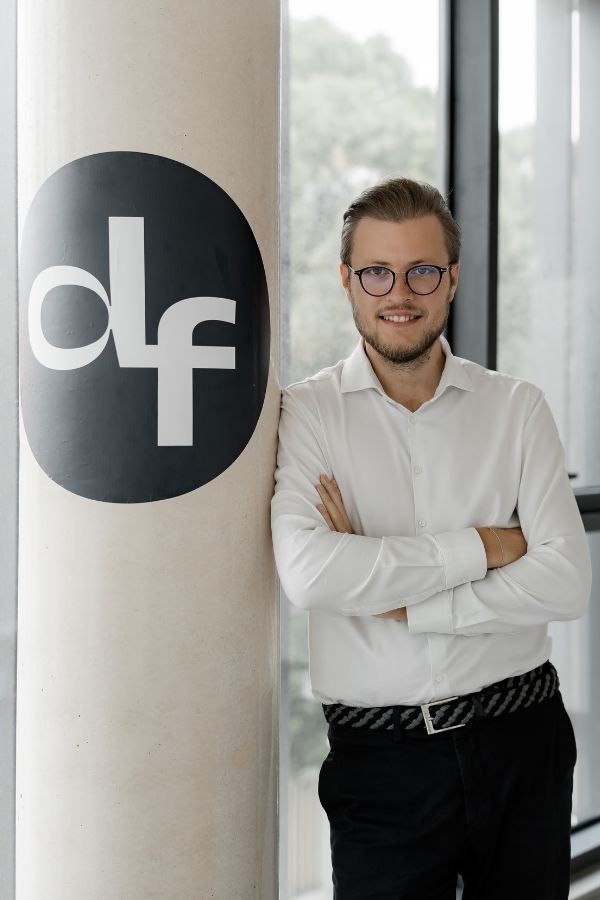
Yannik Schmidt-Grimm, founder of dreamfactory Hospitality Group, was recently named to the Forbes 30 Under 30 list. Flash back to 2018, and Yannik was doing a hotel apprenticeship at the Westin Grand Munich, working in housekeeping. He hadn’t yet secured his first rental property, and he had yet to even begin thinking about opening a hostel, let alone developing a hospitality group that would go on to span multiple properties and use a variety of concepts to provide different forms of lodging.
Following his hotel apprenticeship, Yannik went on to study economics and business while continuing in the hospitality field. He saw the scalability potential in hospitality, but, at the time, Yannik said he didn’t fully understand it. Yannik also began to see, as he got closer to the 9-5 world, that there was more to life than being in corporate and going to work.
“I wanted to make a nice life. I was making enough, but I wanted to bring home more money,” he said. That desire for more coincided with the COVID pandemic hitting the world, which allowed Yannik to step back before taking a big leap forward. It wasn’t long before he found a rental property to invest in, but securing it would require him to come up with some serious capital and do extensive work on the property.
“It was a dark, moldy apartment in Vienna with no sewage and no electricity. Somehow, I found a bank that was willing to finance me the money I needed,” said Yannik. All of the work he did himself, from the floors and walls to the small details. The renovation process was laborious, but the payoff once the place was ready to go live was astounding. Immediately, Yannik said, the return on his rental units was promising enough to think that the model would work.
“I understood then that there was something I could do to escape the 9-5,” said Yannik. From there, he went to the bank and extended his credit, pushing his chips again to the center of the table. He began searching for more units where he could run Airbnb rentals, and it wasn’t long before he found and purchased a 10-unit rental property that would become his next project. The scalability he saw, back during his time in the hotel apprenticeship, was beginning to become a lot clearer.
The revenue he was making from the smaller units was put right back into the business. Yannik’s strategy, to acquire more properties and continue investing in more, positioned him to ultimately build out another operation in Vienna that had 50 rental units. By then, he had built a team and was using the increased revenue to expand. But still, he felt like something was missing.
“Everything was working, but something was off,” said Yannik. Reflecting back to his days at the hotel, Yannik found himself thinking about guest interaction and how, while his business had been scaled immensely from its single unit in that damp apartment in Vienna, he felt like the operation needed to emphasize the hosting element of hospitality.
The First Hostel
Around that time, he got his hands on another property in Vienna that had the capacity to host dozens of guests. Between the location and structure, the building was perfect for a hostel. By then, Yannik had enough—just enough, he said—for a deposit on the place. Again, he pushed his chips into the center of the table and went headfirst into a new endeavor: his first hostel.
Part of the agreement Yannik landed was negotiating two free months of rent on the building, which meant that he was up against the clock to get the place renovated and to start generating revenue. That meant putting in new bathrooms, floors, and building dozens of bunk beds. In one month, the renovations were complete, and Stadtaffe, which translates to City Monkey, was open to the public, complete with 15 bathrooms and 99 beds. But just because the hostel was open didn’t mean that the hard part was over.
“We had one month to earn the money to pay everyone’s salaries, and keep the cash flowing for payroll, while also paying rent for the building,” said Yannik. “It somehow worked out. Even if we were a little late on the first rent payment.”
Even though Yannik found himself pulling a lot of shifts himself, partly to save money on payroll, and the hours were long, he found himself seeing firsthand the benefits of building something that was more hospitality-focused.
“I realized, this is awesome. People are coming from all over the world to stay at this place that we just finished with our own hands,” said Yannik. “This is unreal.”
It was from that realization that the phrase "Win True Friends" became a mantra of the company. An idea that is rooted in the genuine connections people make in hostels, and how a well-run hostel can help organically foster the mantra by creating spaces where people can connect and build lasting friendships.
Scaling the Hostel
Watching the operation blossom and seeing the fruits of their labor lit a fire under Yannik, and it wasn’t long before he began thinking about how to scale the hostel. He had his eyes set on a location in Poland for the next hostel, which would have 108 beds. But what he would come to find out is that opening a hostel in another country comes with its own set of hurdles. From operating laws to securing bank loans and the occasional language barrier, Yannik found that there were new obstacles in his way.
Flash forward several months, and the Poland location was secured and being renovated. Like with opening the Stadtaffe hostel in Vienna, Yannik found himself once again racing the clock. Although this time he had a new crew doing a lot of the renovations, he and his team were very involved in the process and were there until the very last hours before it was to be opened to the public, putting on the finishing touches.
“We had a 108-person group arriving the next day, so everyone was there until 5 or 6 in the morning,” Yannik said. “It was a real team spirit, which I’ve rarely seen anywhere else. Everyone just gave everything they had to make it work.”
From that single, damp apartment in Vienna, Yannik and his team were able to build dreamfactory Hospitality Group, which now includes Stadtaffe - Chic Hostel VIE (Vienna), dreamfactory Hostel Krakow (Poland), and a co-living space in Langenlois (Austria). Dreamfactory operates under three core principles: winning, truth, and friendship.
“We aim to make our guests happy. This equals winning for us. Truth is our second core value. You have to be able to rely on each other, especially in an international company, with so much work being done virtually,” said Yannik. “Friendship is the third value, because hostels aren’t just about selling beds. If you go with that approach, you won’t be successful in any way.”
What's Next
With two hostels and 350 co-living residence units across two countries, dreamfactory Hospitality Group will add a third and fourth hostel, with Greece and Portugal as the new expansion territories. Beyond that, Yannik has been building out an AI platform called Foyera, which is designed for hostel owners to ease the operational side of things by consolidating many of the components that go into hosting guests. The platform is market-ready and will start by focusing on mid-market European hospitality. Stay tuned for more on Foyera.

