
For a backpacker, money is rarely just money. It is a night in a hostel in Bangkok, a train ticket through Europe, a bowl of noodles in Hanoi, a last-minute flight when plans change, or the small emergency purchase that becomes disproportionately expensive because it crosses a border.
That is why choosing among the best travel credit cards is less about collecting a shiny piece of plastic and more about eliminating the small financial leaks that quietly eat into a long trip.
For travelers who regularly leave the United States, one feature deserves immediate attention: no foreign transaction fees. A card that charges a foreign transaction fee can add a percentage to purchases made abroad, including transactions in a foreign currency or, depending on the issuer, purchases with a foreign merchant even when the transaction is displayed in United States dollars. The Consumer Financial Protection Bureau specifically recognizes these charges as a type of credit-card transaction fee.
For a backpacker spending weeks or months overseas, avoiding that fee is not glamorous. It is simply smart.
But the best cards go further. They turn ordinary spending into points or miles that can eventually help pay for flights, hotels and other travel. The challenge is finding the balance between annual fees, earning rates, redemption flexibility and the realities of backpacker spending.
This is where the competition gets interesting.
The Backpacker's Credit Card Problem

Imagine a traveler moving through Southeast Asia for three months. Breakfast comes from a neighborhood café. Accommodation is booked online. Local transportation is paid for by card where possible. A flight from Manila to Bangkok is followed by another to Kuala Lumpur, and perhaps a longer journey home through Tokyo.
None of those individual purchases look particularly significant.
Together, however, they create a meaningful amount of card spending. If the card adds a foreign transaction fee to eligible purchases, the traveler is effectively paying a surcharge simply for being abroad. The Consumer Financial Protection Bureau notes that foreign transaction fees can apply not only to purchases made in foreign currency but also to certain purchases outside the United States or with foreign merchants.
The first rule, therefore, is straightforward: international backpackers should strongly favor a card with no foreign transaction fee.
The second rule is more nuanced. A no-fee card is not automatically the best travel card.
A card that earns little in rewards may save money on foreign transaction fees while missing an opportunity to accumulate valuable travel points. Conversely, a premium card can offer powerful rewards and protections while imposing an annual fee that makes little sense for someone traveling only occasionally.
The best choice depends on how the traveler actually spends.
Chase Sapphire Preferred: The Balanced Backpacker's Choice
For travelers who want one card capable of doing several jobs well, the Chase Sapphire Preferred remains one of the most compelling options.
As of August 2026, the card carries a $95 annual fee and offers a new-cardmember bonus of 75,000 points after spending $5,000 during the first three months. Chase says cardholders earn five points per dollar on purchases through Chase Travel and two points per dollar on other travel purchases. The card also carries no foreign transaction fees.
That combination matters to backpackers because travel spending is not limited to airfare.
The card's rewards structure reaches into several everyday categories, while its Ultimate Rewards points can be used through Chase's travel ecosystem and transferred to participating travel loyalty programs. In June 2026, Chase also expanded the card's benefits, adding a $120 credit every four years toward Global Entry, Transportation Security Administration PreCheck or Nexus, alongside enhanced travel protections.
There is another reason the Sapphire Preferred works particularly well for a traveler who is not interested in micromanaging every purchase: it sits in the middle.
It is not a zero-annual-fee card designed simply to avoid international fees, nor is it a premium card carrying a $795 annual fee.
For the backpacker who wants meaningful travel rewards without stepping into the world of ultra-premium cards, that middle ground is valuable.
Capital One Venture: The Simple Points Machine
If the Chase approach rewards category knowledge, the Capital One Venture Rewards takes a simpler route.
The card currently charges a $95 annual fee and offers 75,000 bonus miles after $4,000 in purchases during the first three months. More importantly for someone backpacking across multiple countries, Capital One advertises unlimited two miles per dollar on every purchase, regardless of category. It also offers five miles per dollar on hotels, vacation rentals and rental cars booked through Capital One Travel. There are no foreign transaction fees.
That flat earning structure can be unusually attractive on the road.
A backpacker does not necessarily know whether a tiny guesthouse, a bus company, a restaurant or an independent tour operator will code as a particular bonus category. With a two-mile-per-dollar baseline, the traveler does not have to think about it.
Capital One also allows Venture miles to be transferred to more than 15 travel loyalty programs, giving travelers another route toward airline redemptions rather than forcing them to use points in only one way.
For the traveler who values simplicity, that flexibility can be more useful than a complicated rewards structure promising a higher theoretical return in narrowly defined categories.
There is a psychological advantage, too. Backpacking already involves enough decisions. Which bus? Which hostel? Which border crossing? Which flight? A card that rewards virtually every purchase at the same baseline rate removes one more decision from the trip.
Citi Strata Premier: A Strong Fit for Everyday Backpacker Spending
The Citi Strata Premier is particularly interesting for travelers whose spending extends beyond flights.
The card carries a $95 annual fee and, as of August 2026, offers 60,000 bonus points after spending $4,000 during the first three months. It earns three points per dollar on air travel and other hotel purchases, restaurants, supermarkets, and gas and electric vehicle charging stations. It also earns ten points per dollar on hotels, car rentals and attractions booked through Citi Travel.
For a backpacker, the restaurant and supermarket categories are especially relevant.
Travel is not simply a sequence of airline tickets. Much of a long trip consists of food, groceries, transportation and accommodation. A card that rewards several of those expenses can accumulate points even when the traveler is not actively booking a flight.
The card also has no foreign transaction fees and permits points to be transferred to a range of travel loyalty partners, including American Airlines, JetBlue, Virgin Atlantic, Cathay and others.
Citi also provides a $100 annual hotel benefit when a single qualifying hotel stay of at least $500 is booked through Citi Travel.
That last benefit illustrates an important distinction for backpackers.
A benefit can be valuable without being particularly useful.
Someone who spends several weeks in budget hostels may never book a qualifying $500 hotel stay. In that case, the benefit should not be treated as automatic savings. The card's everyday earning structure may matter more.
Bank of America Travel Rewards: The No-Fee Contender
Not every backpacker wants to pay an annual fee.
For that traveler, the Bank of America Travel Rewards card deserves attention because it combines a $0 annual fee with no foreign transaction fees. Bank of America currently advertises 25,000 online bonus points worth $250, while the card earns unlimited 1.5 points per dollar on purchases. Travel purchases booked through Bank of America Travel can earn three points per dollar.
There is a certain elegance to that arrangement.
A backpacker does not need to calculate whether the card's benefits have justified an annual charge. There is no annual fee to recover. The card can simply remain available for international spending and earn a consistent rewards rate.
The trade-off is that the rewards structure is less aggressive than some of the $95 annual-fee competitors, particularly for travelers who know how to maximize transferable points.
That makes the Bank of America option less of a points-optimization weapon and more of a low-maintenance travel companion.
For a first-time international traveler, that can be exactly the point.
The Real Value of No Foreign Transaction Fees
It is tempting to treat no foreign transaction fees as a minor perk. For backpackers, it should be closer to a baseline requirement.
Consider a traveler who spends $3,000 abroad on accommodation, food, transportation and activities. A hypothetical three percent foreign transaction fee would represent $90 in additional charges. At $5,000 of international spending, the same percentage would become $150. Chase uses the $5,000 example on its own Sapphire Preferred materials, noting that avoiding a three percent foreign transaction fee would save $150 on that level of international spending.
That money could instead pay for several nights of budget accommodation, multiple long-distance bus journeys or a substantial portion of a regional flight. The important caveat is that a card's lack of foreign transaction fees does not mean every overseas transaction is cost-free. A merchant or payment provider can still impose its own charge. The Consumer Financial Protection Bureau distinguishes fees imposed by a merchant from fees imposed by the card issuer.
There is also the question of dynamic currency conversion, where a merchant offers to convert the purchase into the cardholder's home currency. The presence of a no-foreign-transaction-fee card does not automatically make such a conversion a good deal.
The backpacker's instinct should therefore be to understand the amount being charged and the currency in which the transaction is processed rather than assuming that the words "no foreign transaction fee" eliminate every possible cost.
Points Are Only Valuable If You Can Use Them
The most seductive part of travel credit cards is the promise of free flights. But points are not airline tickets. They are a currency whose usefulness depends on redemption rules, transfer partners, availability and the traveler's willingness to plan.
A card offering two points per dollar is not automatically better than one offering 1.5 points per dollar. The first question is what those points can actually buy. This is why flexible rewards currencies can be particularly valuable to backpackers.
Travel plans change. The cheapest airline from Bangkok to Tokyo may not be the airline that was cheapest when the trip was first planned. A traveler may suddenly discover that an airline loyalty program has a better award price, or that a transfer partner opens up an itinerary that was previously too expensive.
Capital One, for example, allows Venture miles to be transferred to more than 15 travel loyalty programs. Chase similarly allows Ultimate Rewards points to be transferred to participating travel loyalty programs. Citi's ThankYou program also provides transfers to multiple airline and hotel partners. That flexibility can be more important than simply accumulating the largest numerical balance.
A traveler with 50,000 highly flexible points may have more practical options than a traveler holding 70,000 points trapped in a program that does not serve their preferred destinations.
The Cheapest Card Is Not Always the Cheapest Trip
Backpackers naturally gravitate toward avoiding fees. That instinct is usually healthy, but credit-card economics can become more complicated. A $95 annual fee can be worthwhile if the rewards and benefits exceed that cost. But it is not worthwhile simply because a card is labeled a "travel card."
The Consumer Financial Protection Bureau advises consumers to consider whether the benefits and rewards they receive justify annual fees and other charges. It also specifically notes that frequent international travelers may want to consider cards with lower or no foreign transaction fees. This is particularly important for occasional travelers.
If someone takes one international trip every few years and spends little on the card, a no-annual-fee option can make considerably more sense. If someone spends heavily on travel and can use transferable points, a $95 annual fee may be relatively easy to justify.
The calculation should be made on actual spending rather than imagined spending.
What About Premium Travel Cards?
The premium end of the market can be spectacular. It can also be spectacularly unnecessary.
Chase's Sapphire Reserve, for example, carries a $795 annual fee as of August 2026, while offering a much larger collection of travel benefits and earning eight points per dollar on Chase Travel, alongside four points per dollar on flights and hotels booked directly.
For a frequent traveler who can exploit credits, airport benefits and other perks, that kind of card can make sense. For a backpacker spending months in inexpensive hostels, riding buses and buying street food, it may be difficult to extract enough value to justify the annual cost.
The lesson is simple: premium does not mean better for everyone.
A card should match the trip, not the other way around.
The Backpacker's Best Strategy
There is no universal winner among the best travel credit cards.
For an all-around traveler who wants a strong combination of transferable points, travel protections and a moderate annual fee, the Chase Sapphire Preferred is one of the strongest choices. Chase's current offering combines a $95 annual fee, a substantial welcome offer, travel rewards and no foreign transaction fees.
For someone who values simple earning above everything else, Capital One Venture is compelling because its baseline two miles per dollar applies broadly across everyday purchases, while international purchases carry no foreign transaction fees.
For a traveler whose spending is heavily concentrated in food, supermarkets and air travel, Citi Strata Premier deserves a close look because its three-point categories reach into many of the expenses that accumulate during a long trip.
And for someone who wants to avoid an annual fee altogether, Bank of America Travel Rewards offers a straightforward combination of no annual fee, no foreign transaction fees and 1.5 points per dollar on general purchases.
The winning card, in other words, is not necessarily the one with the biggest welcome bonus.
It is the one that quietly works in the background while you are busy figuring out where you are sleeping tomorrow night.
The Credit Card Should Serve the Adventure
The romance of backpacking is built around freedom: a one-way ticket, an open-ended itinerary, a hostel found at the last minute, a conversation that changes the destination. Credit cards are less romantic.
They are financial instruments, and the wrong one can make an adventure more expensive.
The right one, however, can become almost invisible. It does not charge an unnecessary fee every time you cross a border. It earns rewards from the meals, accommodation and transportation you were already going to purchase. Its points can eventually become another flight. Its travel protections can provide a layer of security when plans go wrong.
That is the real appeal of the best travel credit cards for backpackers. It is making the money already being spent on the journey work a little harder.
And before applying, travelers should always verify the current annual fee, rewards structure, welcome offer, eligibility requirements and foreign transaction fee directly with the issuer. Credit-card terms change, sometimes quickly, and the offers described here are current as of August 2026.
What To Prioritize Now?
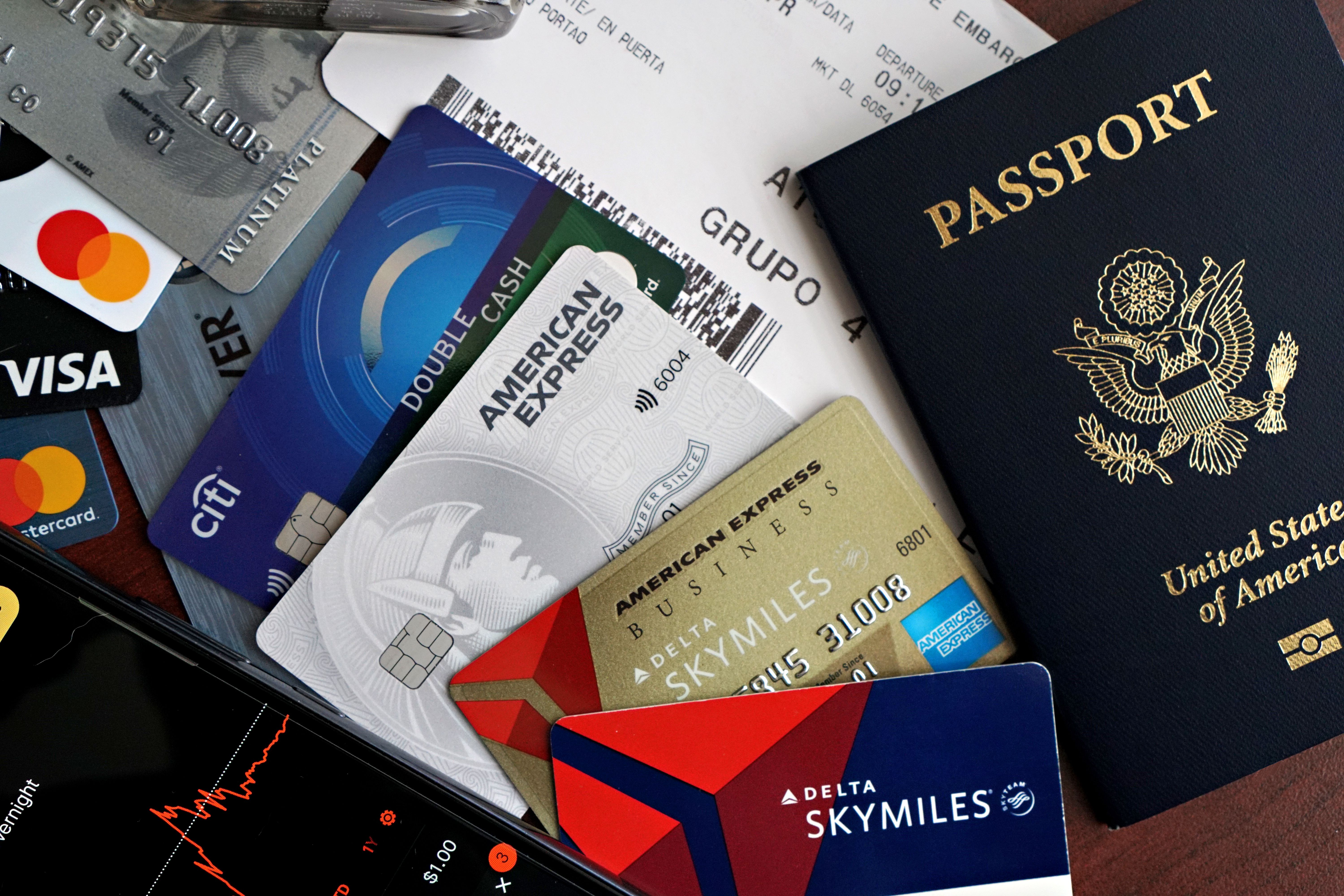
For backpackers, the starting point is simple: prioritize no foreign transaction fee cards. From there, choose according to how you actually spend. Chase Sapphire Preferred offers a strong overall balance, Capital One Venture favors straightforward earning, Citi Strata Premier rewards several everyday travel categories, and Bank of America Travel Rewards provides a no-annual-fee alternative.
The best travel credit card is ultimately the one whose fees, rewards and redemption options fit the journey you are actually taking, not the fantasy trip printed in the advertisement.
References:
Bank of America. n.d.-a. “Bank of America® Travel Rewards Credit Card - Apply Today.” Accessed August 21, 2026. https://www.bankofamerica.com/credit-cards/products/travel-rewards-credi....
Capital One. 2025. “Foreign Transaction Fees: Defined & Explained | Capital One.” https://www.capitalone.com/learn-grow/money-management/foreign-transacti....
Capitalone.Com. 2014. “Venture Miles Rewards Credit Card | Capital One.” https://www.capitalone.com/credit-cards/venture/.
Creditcards.Chase.Com. n.d.-b. “Chase Sapphire Preferred Credit Card | Chase.Com.” Accessed August 21, 2026. https://creditcards.chase.com/rewards-credit-cards/sapphire/preferred.

