
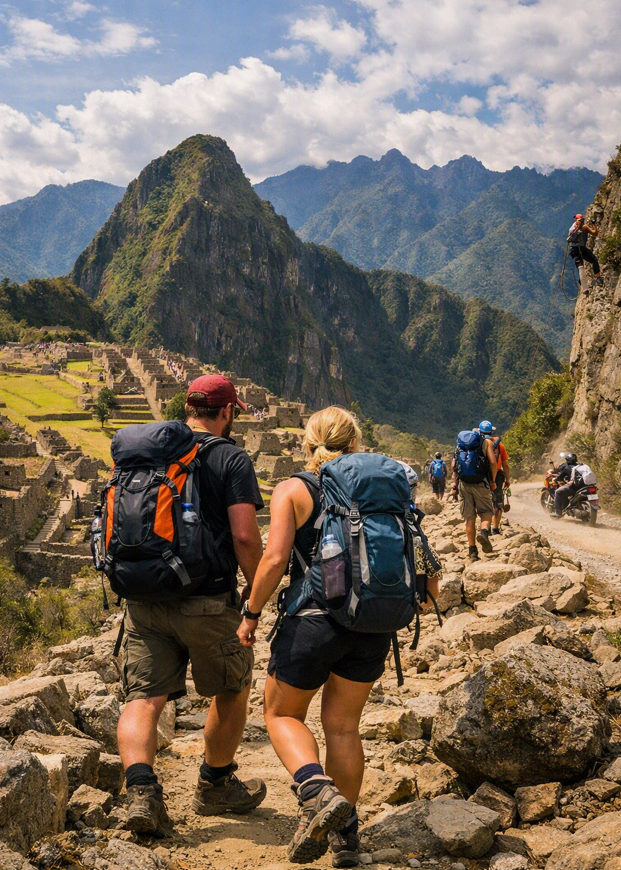
The Pros and Cons of Slow Travel vs Fast Paced Backpacking
The argument over travel pace often begins with a simple question: how much can you see before the journey ends?
One traveler may spend ten days crossing several cities, moving by train, bus, or budget airline with a carefully planned itinerary. Another may spend an entire month in one neighborhood, returning to the same café, learning local transport, and gradually becoming familiar with the people around them.
Both are traveling. They are simply measuring the value of travel differently.
The debate between slow travel and fast travel is ultimately about time, money, personality, and purpose. Fast paced backpacking offers breadth and constant discovery. Slow travel offers depth, routine, and the opportunity to experience a destination beyond its tourist attractions.
Understanding Travel Pacing
Slow travel is connected to a broader philosophy that values presence, local interaction, and meaningful experiences over simply accumulating destinations. Academic research describes slow tourism as an approach that emphasizes quality, engagement, flexibility, and stronger connections between travelers and destinations. It is not necessarily about physically moving slowly, but about allowing enough time to experience a place rather than rushing through it.
Fast travel follows the opposite logic. The goal is to maximize exposure within a limited period. A traveler might explore several European cities in two weeks or move through multiple countries during a backpacking trip across Southeast Asia.
Neither approach is automatically better.
The right travel pacing depends on what the traveler has available and what they want from the journey.
The Budget Question
Money is one of the most important differences between slow travel and fast travel.
Longer stays can reduce accommodation costs because many platforms and properties offer weekly or monthly pricing. Airbnb, for example, allows hosts to provide discounts for stays of seven nights or longer and monthly discounts for stays of at least twenty-eight nights. The company reported that longer stays represented a significant share of nights booked globally in recent years.
Slow travelers can also reduce transportation expenses by avoiding frequent flights, trains, buses, and transfers. Having access to a kitchen can reduce restaurant spending, while staying in one neighborhood makes walking and public transportation more practical.
However, slow travel is not automatically cheaper. Some destinations have expensive long-term accommodation, and travelers must also consider the opportunity cost of spending several weeks in one location.
Fast travel can be more expensive per day because frequent transportation and short-term accommodation add up. Yet for people with limited vacation time, spending more can be worthwhile if it allows them to experience several destinations during one trip.
In other words, the cheaper travel style depends partly on which resource is scarce: time or money.
Depth Versus Variety
The strongest argument for slow travel is the possibility of becoming a temporary resident rather than remaining a visitor.
After several weeks in one place, a traveler may recognize neighborhood streets, develop routines, communicate more comfortably with locals, and discover places that rarely appear in conventional sightseeing guides. Research into slow tourism has linked this approach with deeper destination engagement, local interaction, and greater experiential value.
Fast travel provides a different reward.
There is an undeniable excitement in arriving somewhere unfamiliar every few days. A backpacker can experience different cuisines, landscapes, languages, and cultures within a single journey. For travelers driven by curiosity and novelty, constant movement can be the most exciting part of the adventure.
The cost is often exhaustion.
Packing repeatedly, navigating transportation, checking into accommodation, and following strict schedules can turn an exciting itinerary into logistical work. Travelers may see more destinations but have less time to understand each one.
Personality Matters
Travel pacing is also deeply personal.
Someone who enjoys routine and reflection may find slow travel liberating. Someone energized by novelty may become restless after spending too long in one location.
But personality should not be reduced to simple labels. An outgoing traveler might prefer slow travel because longer stays create more opportunities for friendships, while an independent traveler might enjoy fast travel because it allows constant exploration.
The better question is whether you gain energy from familiarity or change.
The Hybrid Approach
For many travelers, the smartest solution lies between the extremes.
A journey can move quickly between major regions while allowing longer stays in places that genuinely capture the traveler's interest. Someone might spend several days exploring major cities before settling for two weeks in a smaller destination.
This hybrid approach preserves the excitement of fast travel while creating space for the depth associated with slow travel.
Ultimately, travel is not a competition to collect destinations.
Slow travel rewards patience with immersion and can stretch a flexible budget further. Fast travel rewards curiosity with variety and can make limited vacation time more productive. The best travel pacing is the one that matches your financial resources, available time, energy, and personal definition of a meaningful journey.
Recap
Slow travel generally offers deeper cultural experiences, fewer transportation costs, and greater opportunities for longer-stay savings. Fast travel provides variety and excitement but can demand more money, energy, and logistical planning. For many travelers, combining both approaches offers the most flexible way to explore the world.

