
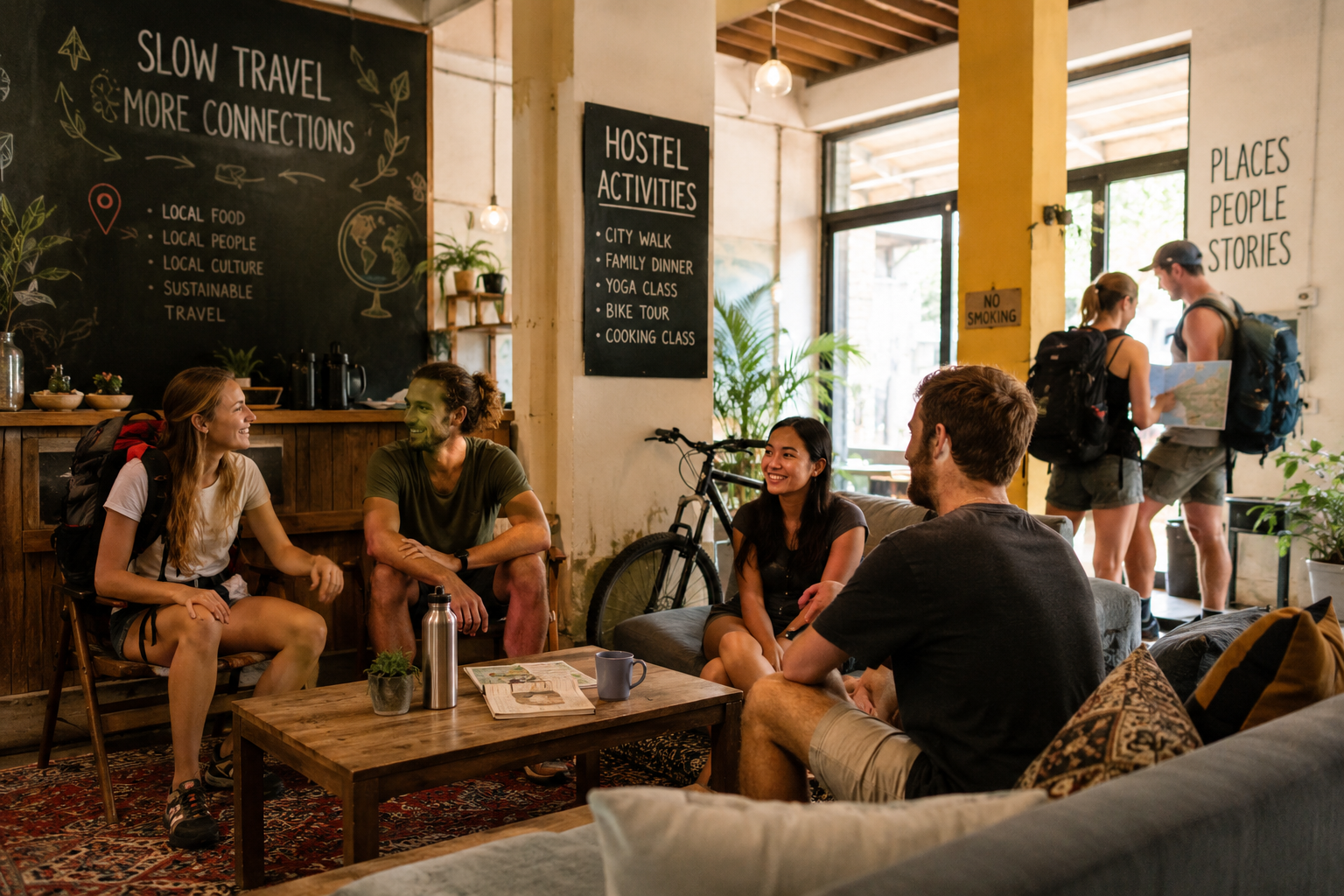
Slow Travel and Hostel Culture
In a world driven by fast flights, packed itineraries, and social media travel trends, many travelers are embracing a more meaningful way to explore the globe. Slow travel and hostel culture are becoming increasingly connected as modern travelers prioritize authentic experiences, sustainability, and genuine human connection. Rather than rushing through multiple destinations in a short period, slow travel encourages people to spend more time in one place, connect with local communities, and appreciate the journey itself.
This growing travel movement reflects a shift away from tourism focused solely on sightseeing and toward experiences that create lasting memories. At the center of this shift are hostels, which have evolved into social, affordable, and community-driven spaces that perfectly complement the philosophy of slow travel.
What Is Slow Travel?
Slow travel is more than simply traveling at a slower pace. It is a mindset that values quality over quantity. Instead of trying to visit as many places as possible, slow travelers choose to immerse themselves in one destination for a longer period. They often explore neighborhoods beyond tourist areas, use local transportation, support small businesses, and participate in everyday local life.
The goal of slow travel is to create deeper cultural experiences while reducing stress and travel fatigue. Travelers who embrace this style often discover hidden gems, develop meaningful relationships, and gain a stronger understanding of the places they visit. This approach also allows people to travel more mindfully and appreciate the culture, food, traditions, and rhythm of a destination.
Why Hostels Support Slow Travel
Hostels naturally align with the values of slow travel because they provide affordability, flexibility, and strong social environments. Modern hostels are no longer limited to backpackers on tight budgets. Today’s hostels attract digital nomads, solo travelers, students, remote workers, and even older travelers looking for authentic and community-oriented accommodations.
One of the biggest advantages of hostels is affordability. Lower accommodation costs allow travelers to extend their stays and spend more time experiencing a destination without exceeding their budget. Longer stays encourage travelers to build routines, interact with locals, and truly settle into a place rather than simply passing through quickly.
Hostels also create opportunities for cultural exchange. Shared kitchens, lounges, coworking spaces, and organized events encourage travelers from around the world to interact and share experiences. These social settings often lead to friendships, travel partnerships, and memorable conversations that become highlights of the journey.
Many hostels now offer experiences designed specifically for slow travelers, including walking tours, yoga sessions, community dinners, cultural workshops, and volunteer opportunities. These activities help travelers feel more connected both to the destination and to the people around them.
Sustainability and Community
Sustainability is another major reason why slow travel and hostel culture work so well together. Slow travel reduces the environmental impact of constant transportation and encourages travelers to support local economies. Many hostels are also embracing eco-friendly practices to meet the growing demand for responsible tourism.
Eco-conscious hostels often reduce single-use plastics, promote recycling, use renewable energy, and partner with local businesses. Travelers staying in hostels are more likely to shop at local markets, eat at family-owned restaurants, and participate in community-based activities. This creates a positive economic impact while preserving the cultural identity of destinations.
The Future of Travel
As travel trends continue to evolve, slow travel and hostel culture are expected to grow together. Travelers are increasingly choosing experiences that prioritize connection, sustainability, and personal growth over fast-paced tourism. Hostels provide the ideal environment for this transformation by offering affordability, flexibility, and a strong sense of community.
In a fast-moving world, slow travel reminds people to pause, explore deeply, and appreciate the cultures and people they encounter along the way. Combined with the welcoming atmosphere of hostels, it creates a richer and more rewarding travel experience for modern travelers seeking authenticity, adventure, and meaningful connections.

