
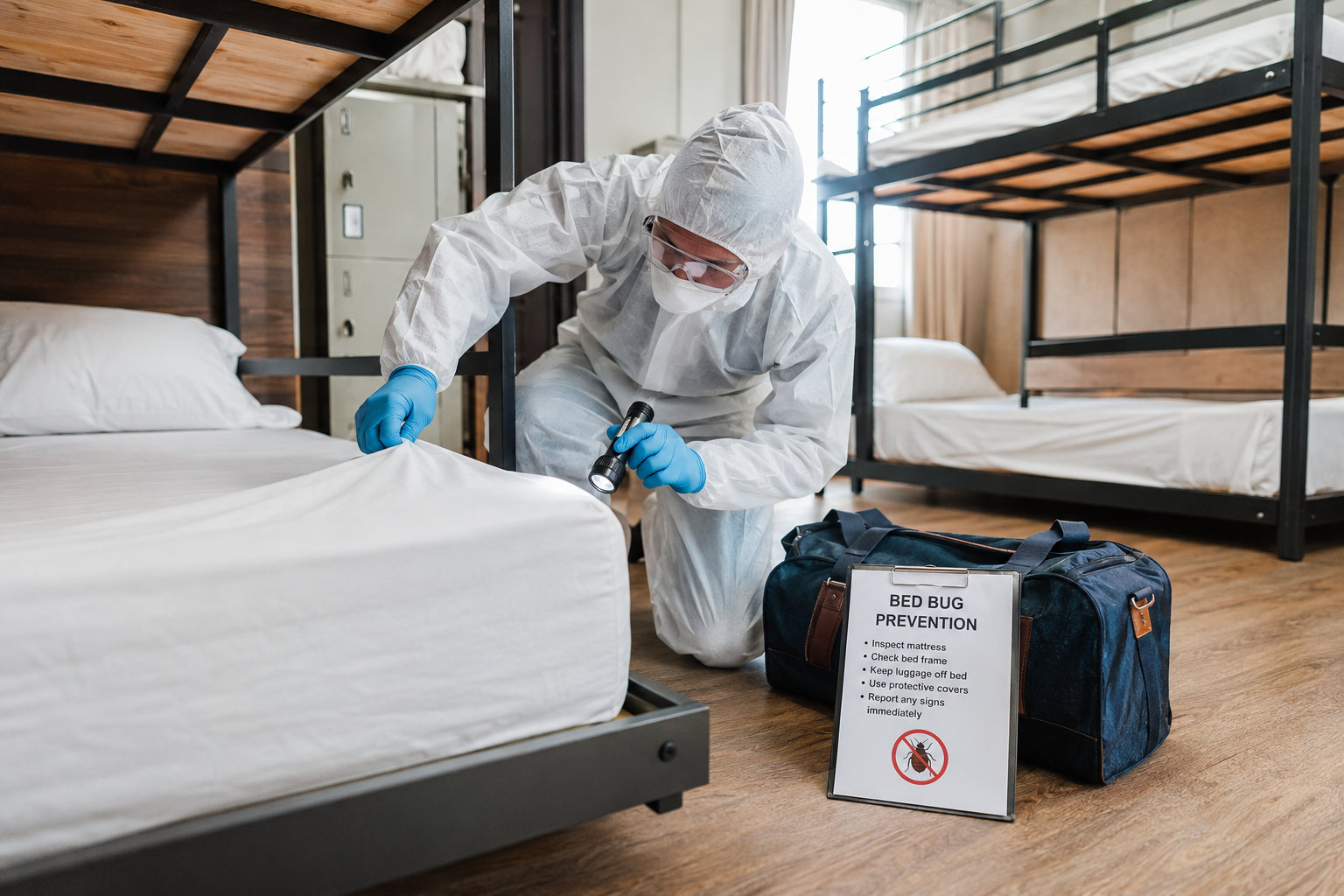
Preventing Bed Bugs in Hostels
Hostels are a cornerstone of budget travel, offering affordability, social interaction, and convenient locations. They provide unique opportunities for cultural exchange and memorable adventures. Yet one concern often raised by guests is the possibility of bed bugs. As global tourism continues to grow, awareness of this issue has become increasingly important. Understanding the reality of bed bugs in hostels—and knowing how to prevent them—helps both travelers and hostel operators maintain safe, clean, and comfortable accommodations.
The Reality of Bed Bugs
Bed bugs are small, nocturnal insects that feed on human blood. They are not a sign of poor hygiene, nor are they limited to neglected properties. Even spotless, professionally managed hostels can face infestations because these pests travel easily through luggage, backpacks, clothing, and bedding. Since hostels welcome a constant flow of international guests, they naturally face higher exposure risks than private homes.
Prevention for Hostel Operators
For hostel owners and managers, prevention begins with vigilance and consistency.
1. Regular inspections: Staff should be trained to recognize signs such as reddish stains on sheets, dark spots near mattress seams, shed skins, or live insects hiding in cracks and corners. Early detection is critical because bed bugs reproduce quickly and can spread from one room to another in a short time.
2. Mattress and furniture checks: Mattresses should be inspected frequently around seams, zippers, and frames. Protective encasements make detection easier, while metal bed frames reduce hiding spots compared to wooden ones.
3. Laundry management: Bedding, pillowcases, and blankets should be washed at high temperatures, as heat is highly effective in killing bed bugs and their eggs. Vacuuming should be thorough, with attention to carpets, lockers, and under beds where pests may remain unnoticed.
These measures not only prevent infestations but also reassure guests that the hostel prioritizes their health and comfort.
Precautions for Travelers
Guests themselves can take simple steps to reduce risks:
• Inspect mattresses and nearby areas before unpacking.
• Elevate luggage on racks instead of placing bags directly on beds or floors.
• Store clothing in sealed bags during longer stays for added protection.
These habits may seem small, but they can significantly lower the chances of bringing bed bugs home after a trip.
Industry Response and Technology
Most reputable hostels act quickly when bed bugs are reported, working with pest control specialists to eliminate problems before they spread. The hospitality industry has become more proactive in recent years, adopting strict sanitation protocols and preventive maintenance programs.
Technology is also reshaping pest management. Some hostels now use heat treatment systems, monitoring devices, and digital reporting tools to detect and resolve infestations more efficiently. These solutions minimize disruption, improve guest confidence, and raise overall safety standards.
Accountability Through Reviews
Online reviews have further increased accountability within the hostel industry. Travelers frequently share feedback about cleanliness and room conditions, motivating operators to uphold higher standards. Many modern hostels now prioritize hygiene, staff training, and rapid response systems to protect their reputation and ensure positive guest experiences.
A Broader Perspective
It is important to remember that bed bugs are not unique to hostels. Hotels, airports, public transportation, and even luxury accommodations can encounter the same issue. Bed bugs travel wherever people go, and infestations can occur in any environment. What matters most is how swiftly and professionally the problem is handled.
Conclusion
Preventing bed bugs in hostels requires cooperation between management and travelers alike. Through regular inspections, proper cleaning procedures, staff education, and smart guest practices, risks can be significantly reduced. As global tourism continues to expand, awareness and prevention remain the most effective tools for keeping hostel stays safe, affordable, and enjoyable for everyone.

