
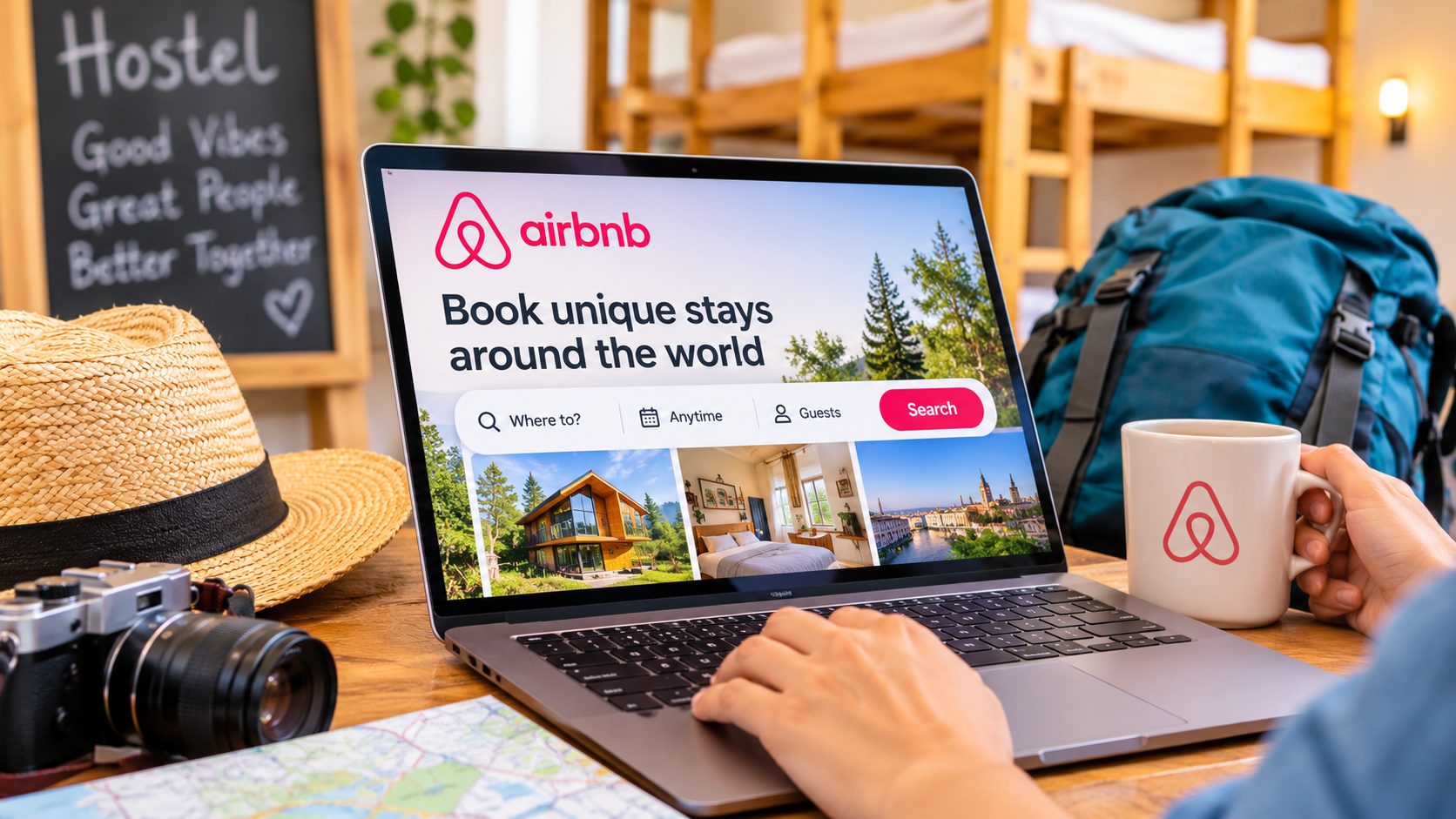
Global travel demand continues to show resilience, with Airbnb reporting stronger-than-expected business results and preparing to introduce AI-powered trip planning. What does this mean for independent hostels and accommodation operators?
The global travel industry is showing positive momentum as travelers continue to book trips despite inflation, higher transportation costs, and geopolitical uncertainty.
On November 5, 2026, Airbnb raised its full-year revenue growth forecast to the high teens, up from its previous expectation of at least mid-teens growth. The announcement followed stronger-than-expected third-quarter financial results, reflecting continued demand for leisure travel worldwide.
According to Reuters, Airbnb reported third-quarter revenue of $4.87 billion, representing a 19% increase compared with the same period last year. Its global nights and seats booked, a metric that includes room stays and service bookings, increased by 16% to 155 million.
Booking activity also remained strong across major markets. North American bookings grew by low double digits year over year, while Europe, the Middle East, and Africa recorded growth in the mid-teens.
Another important development is Airbnb's investment in artificial intelligence. The company announced plans to introduce its own AI-powered agent in the first half of 2027. The technology is expected to help guests plan and book their trips, potentially changing how travelers discover destinations and accommodation options.
Airbnb also reported improvements in customer support efficiency, with approximately 40% of customer support issues resolved without human assistance during the quarter.
These developments highlight two important trends shaping the accommodation industry: continued travel demand and the growing influence of digital technology in the guest booking experience.
What This Means for Your Hostel
For independent hostel owners and operators, Airbnb's results offer useful insights into where the travel industry is heading.
Here are three opportunities worth considering:
1. Make Your Hostel Easier to Discover Online
Travelers increasingly rely on digital platforms when researching destinations and accommodation. Maintain updated listings, high-quality photographs, accurate descriptions, and positive guest reviews across booking platforms and your website.
2. Explore AI and Automation for Your Operations
AI-powered tools can help hostels improve customer communication, answer frequently asked questions, create marketing content, and streamline administrative tasks. Start with simple automation that saves staff time without sacrificing personal guest service.
3. Strengthen Your Direct Booking Strategy
Don't rely entirely on third-party booking platforms. Build your social media presence, encourage repeat guests, collect email subscribers, and make direct reservations convenient. A strong online presence can help your hostel attract travelers before they choose where to book.
The Bottom Line: Travel demand remains resilient, and technology is rapidly changing how people plan and book their trips. Hostels that invest in online visibility, smart technology, and meaningful guest experiences will be better positioned to compete in an increasingly digital travel market.
Original source: Reuters – Airbnb lifts annual revenue growth forecast on resilient global travel demand, November 5, 2026.

