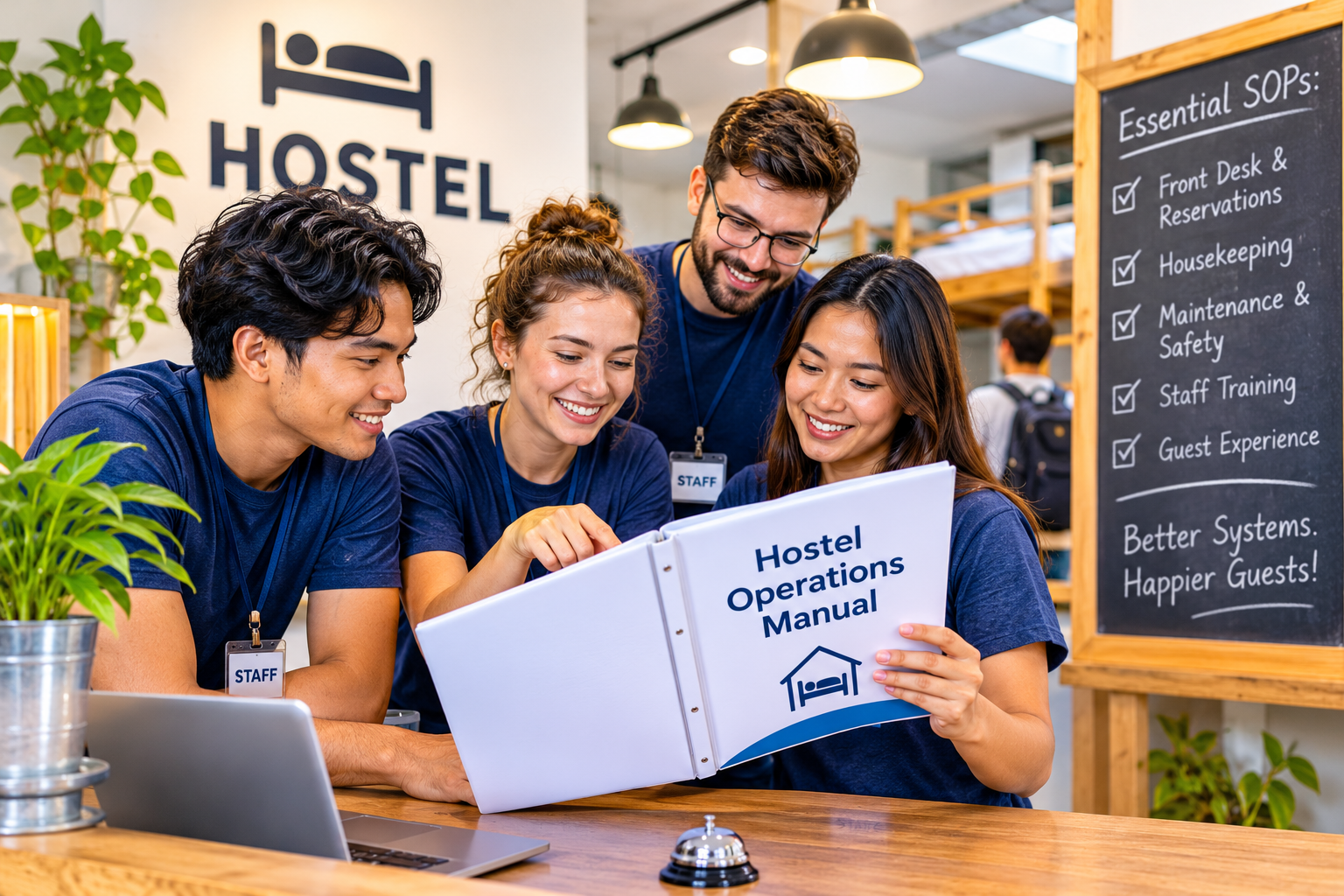
Running a successful hostel takes more than providing beds and welcoming travelers. Behind every smooth check-in, clean dormitory, and positive guest experience is a team following clear procedures. A well-organized hostel operations manual helps owners and managers maintain consistency, train staff, prevent operational problems, and deliver better guest experiences.
Whether you're opening a new hostel or managing an established property, documenting your Standard Operating Procedures (SOPs) is one of the most valuable investments you can make in your business. Read How to Open a Hostel in 2027 for more guidance.
Why Every Hostel Needs an Operations Manual
Hostels operate differently from traditional hotels. They manage shared dormitories, communal kitchens, common areas, social activities, frequent guest turnover, and staff working across multiple shifts.
Without documented procedures, employees may handle the same situation differently. Important information can get lost during shift changes, cleaning standards may become inconsistent, and managers may spend too much time answering questions that could have been addressed through clear instructions.
An operations manual provides a central reference for how your hostel operates.
It helps you:
- Maintain consistent service and housekeeping standards.
- Train new employees more efficiently.
- Reduce mistakes and misunderstandings.
- Improve communication between departments and shifts.
- Establish accountability among staff members.
- Handle guest complaints and emergencies more effectively.
Most importantly, it allows hostel owners and managers to spend less time fixing recurring problems and more time improving the business.
1. Create SOPs for Front Desk and Reservations
The front desk is one of the most important operational areas of a hostel. It is often the first point of contact for guests and plays a major role in their overall experience.
Your front desk SOPs should explain how staff members handle:
- Reservations, modifications, and cancellations.
- Guest check-in and check-out.
- Payment collection, deposits, and refunds.
- Walk-in guests and overbooking situations.
- Bed assignments and room availability.
- Guest questions, complaints, and special requests.
Include step-by-step instructions for using your Property Management System (PMS), processing payments, and updating guest information.
Staff should also know when to resolve an issue independently and when to escalate it to a supervisor.
2. Establish Housekeeping and Cleaning Standards
Cleanliness is essential to a hostel's reputation. Shared bathrooms, kitchens, dormitories, and common areas require consistent attention throughout the day.
Your housekeeping manual should include:
- Daily cleaning schedules and assigned responsibilities.
- Dormitory bed turnover procedures.
- Bathroom and shower cleaning standards.
- Kitchen and communal-area maintenance.
- Linen and laundry management.
- Lost property handling.
- Cleaning supply storage and safety instructions.
Consider creating room inspection checklists that employees complete after cleaning.
These checklists help managers verify that rooms and shared spaces meet the property's standards before guests use them.
3. Document Maintenance, Safety, and Emergency Procedures
Small maintenance problems can quickly become larger operational issues if they are ignored.
Create procedures for reporting and addressing maintenance concerns, including plumbing problems, electrical issues, damaged furniture, broken locks, and malfunctioning equipment.
Your manual should also cover:
- Daily property inspections.
- Maintenance request reporting.
- Emergency contact information.
- Fire prevention and evacuation procedures.
- First-aid and incident reporting.
- Security, access control, and key management.
Make sure emergency procedures are accessible to employees and regularly reviewed. Staff should understand their responsibilities during emergencies and know how to contact the appropriate authorities.
All safety procedures must comply with applicable local regulations and professional guidance.
4. Build a Staff Onboarding and Training System
A hostel's service quality depends heavily on its employees.
Without proper onboarding, new staff members may struggle to understand their responsibilities, workplace expectations, and daily procedures.
Your staff onboarding SOP should include:
- Job descriptions and responsibilities.
- Introduction to hostel facilities and policies.
- PMS and front desk training.
- Housekeeping and safety training.
- Guest communication standards.
- Emergency response responsibilities.
- Performance feedback and evaluation.
Assign experienced employees to guide new team members during their first shifts.
A structured onboarding process helps employees become confident in their roles while reducing the amount of time managers spend repeating instructions.
5. Improve Staff Communication and Shift Handover
Hostels often operate across multiple shifts, making communication essential.
Important information about arriving guests, pending maintenance, complaints, payments, and special requests must be shared between employees.
Establish a standardized shift handover process.
A daily handover report should include:
- Expected arrivals and departures.
- Outstanding guest concerns.
- Unresolved maintenance requests.
- Important incidents or security concerns.
- Cash reconciliation and payment issues.
- Tasks that require follow-up from the next shift.
Use a secure communication platform or shared operational log to keep information organized.
Avoid relying entirely on informal conversations, as important details can easily be forgotten.
6. Review and Update Your Operations Manual Regularly
An operations manual should evolve as your hostel grows.
New technology, staffing changes, guest expectations, and operational challenges may require updates to existing procedures.
Assign a person responsible for reviewing the manual and establishing a regular review schedule.
Ask employees for feedback about procedures that are unclear, outdated, or difficult to follow.
You can also use guest reviews, recurring complaints, and operational reports to identify areas that need improvement.
Make sure every employee has access to the latest approved version.
Build a Better-Managed Hostel Through Better Systems
A well-organized hostel doesn't depend on one manager knowing everything or one experienced employee solving every problem.
It depends on clear systems that allow the entire team to work together.
Creating an operations manual may take time, but the long-term benefits include better staff performance, more consistent guest experiences, fewer operational mistakes, and a more sustainable business.
Start with the essential procedures, involve your employees, and improve your systems as your hostel grows.
A better-managed hostel starts with a team that knows exactly what to do.