
For years, the party hostel had a simple formula: cheap dorms, a bar, a few pub crawls and enough strangers in one room to guarantee a story by morning.
That formula is becoming harder to sell.
A recent Guardian report captures one side of the shift particularly well: travelers are increasingly willing to pay more for private rooms, better facilities and a good night's sleep. Hostels are responding with private rooms, pods, cafés, coworking spaces, pools and wellness facilities—moving further away from the traditional image of the crowded backpacker dorm.
But calling this simply the “death of the party hostel” misses the more interesting question:
If travelers still want to meet people, what happens when the old way of creating that connection no longer works?
The economics are changing
The strongest signal is not necessarily that travelers have stopped staying in dorms. It is that the economics of dorms are becoming more difficult.
Cloudbeds' 2026 State of Hostels Report, based on 32 million bookings across 180 countries, found that occupancy grew for both private rooms and dorms in 2025. Yet the two products showed a significant difference in pricing performance: private-room ADR remained stable, while dorm ADR declined by 8.2%.
That suggests a more nuanced shift.
Demand for the hostel model remains. But the willingness to compromise is changing.
A traveler may still want the price and social possibilities of a hostel while becoming increasingly selective about how much privacy, sleep and personal space they are prepared to give up.
This is why the growth of private rooms and pods matters. They don't necessarily represent a move away from hostels. They represent an attempt to make the hostel proposition compatible with a broader range of travelers.
The hostel is becoming less about one room type for everyone and more about different levels of privacy within the same social environment.
Socializing hasn't disappeared
This is where the story gets more interesting.
A recent discussion on Reddit by a hostel worker offered a useful observation: some guests complain that a hostel has “no atmosphere” while spending their own time in common areas wearing headphones, watching Netflix behind privacy curtains or waiting for someone else to start a conversation.
This is not industry research, and it shouldn't be treated as such.
But as a frontline observation, it captures a real tension in the modern hostel experience:
People can want connection without necessarily wanting constant interaction.
That is very different from saying younger travelers have stopped being social.
In fact, many of the behaviors associated with today's travelers point in the opposite direction. Younger travelers continue to value experiences, local discovery and meeting other people. The difference is that social interaction increasingly needs to fit around individual preferences rather than dominate the entire stay.
The old party hostel assumed that proximity would create connection.
The new guest may need a reason, an invitation or a better-designed setting to make that connection happen.
The product is no longer just the bed
This changes what a hostel is actually selling.
If the dorm is primarily competing on price, operators are vulnerable to an increasingly transparent market. Guests can compare dozens of beds on an OTA within seconds, while rising OTA dependence makes competing purely on price an uncomfortable strategy for operators. Cloudbeds reports that OTAs accounted for 73.7% of hostel bookings globally in 2025.
The alternative is to give guests more dimensions on which to choose.
A good hostel can offer a quiet place to sleep and a lively common area.
A private room can provide personal space without removing access to the social life downstairs.
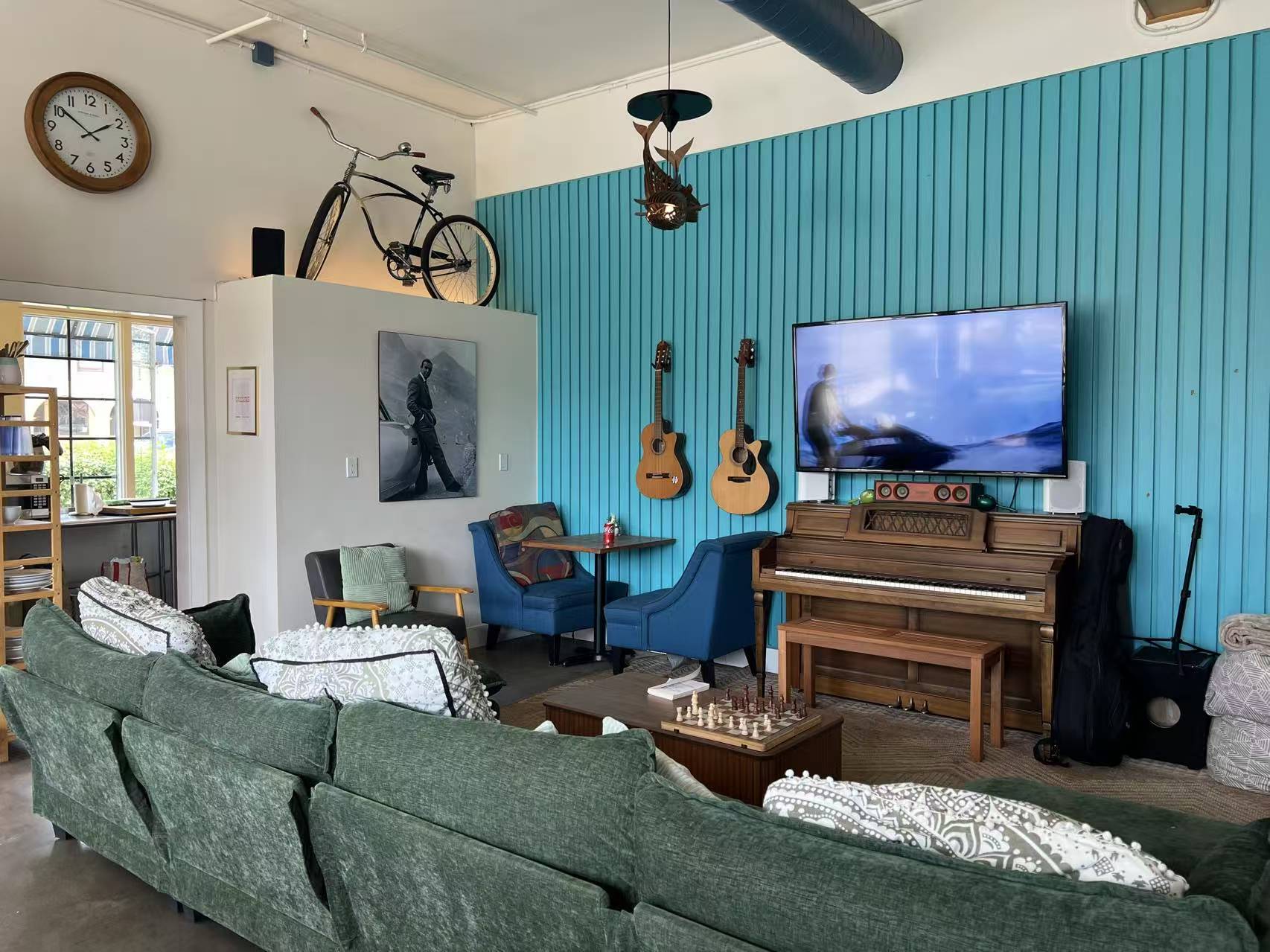
A café or coworking area can attract guests during the day, while a dinner, walking tour or small group activity creates opportunities to meet people in the evening.
The important shift is that community can no longer be left entirely to chance.
Not because every hostel needs to become an events business, but because putting people in the same physical space does not automatically produce meaningful interaction.
The social experience increasingly needs some degree of design.
From spontaneous party to intentional community
This may be the biggest opportunity hidden inside the decline of the traditional party hostel.
The answer isn't to make hostels less social.
It is to make socializing more optional, more purposeful and easier to enter.
That could mean:
a communal dinner instead of another drinking game;
a local hike instead of a generic pub crawl;
smaller group activities rather than large organized parties;
common spaces designed for conversation as well as work;
digital communities that allow guests to connect before meeting in person.
None of these ideas are particularly revolutionary.
What is changing is their role.
In the traditional hostel, social interaction was often the default.
In the next generation of hostels, privacy may become the default, while community becomes something guests can actively opt into.
That is a subtle but important product change.
So, what comes next?
The next successful hostel is unlikely to be the one that simply becomes more luxurious.
Nor is it necessarily the one that abandons the party.
It will be the one that understands the two things travelers increasingly want to have at the same time:
the freedom to be alone, and the opportunity not to be.
That creates a different kind of hostel—one where a private room does not mean isolation, and a social space does not mean noise.
The party hostel may be losing its old formula.
But the hostel itself still has something hotels and short-term rentals struggle to replicate:
the possibility of meeting people you would never have met otherwise.
The opportunity now is to redesign that possibility for how people actually travel today.

