
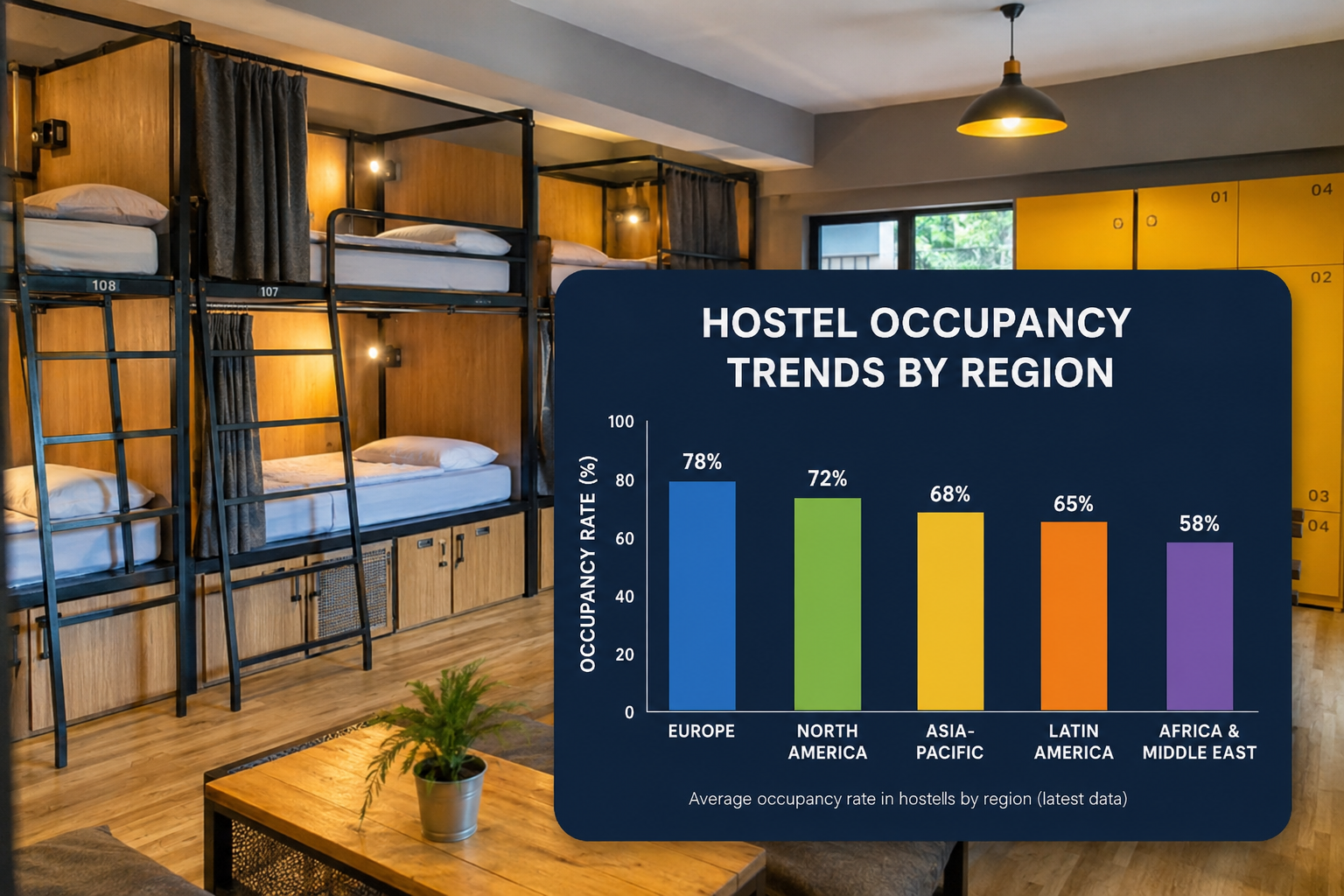
Hostel Occupancy Trends by Region (Data Breakdown)
Hostel occupancy rates remain one of the most important indicators of performance within the global hospitality industry. As travel demand evolves and visitor preferences shift, understanding hostel occupancy trends by region provides valuable insights for hostel operators, investors, tourism boards, and travelers. Occupancy levels reveal where demand is strongest, how seasonal patterns influence bookings, and which destinations are experiencing the fastest growth.
Understanding Hostel Occupancy Rates
Hostel occupancy refers to the percentage of available beds or rooms that are occupied during a specific period. Higher occupancy rates generally indicate stronger demand and healthier revenue performance. While occupancy can fluctuate due to seasonality, economic conditions, and tourism trends, regional comparisons help identify broader market patterns.
In recent years, hostels have benefited from the rise of budget-conscious travel, digital nomadism, experiential tourism, and solo travel. These factors have contributed to increased occupancy levels across many destinations, making hostels a resilient segment of the accommodation market.
Europe Remains the Global Leader
Europe consistently records some of the highest hostel occupancy rates worldwide. Popular backpacking destinations such as Spain, Portugal, Germany, and the Netherlands continue to attract strong international demand. Major cities including Barcelona, Lisbon, Berlin, and Amsterdam often achieve occupancy rates exceeding 75% during peak travel seasons. Summer months typically produce the strongest results, driven by international tourism, festivals, and extended holiday periods. The region’s transportation networks, established hostel culture, and high concentration of young travelers contribute significantly to strong year-round performance.
North America Shows Steady Growth
Hostel occupancy across North America has experienced steady growth as travelers increasingly seek affordable options in major urban centers and outdoor destinations. Cities such as New York, Los Angeles, San Diego, Vancouver, and Toronto continue to report strong occupancy levels, particularly during summer and holiday periods. Many hostels have diversified by offering private rooms, coworking spaces, and community-focused experiences. Average occupancy rates in major tourist markets often range between 60% and 80%, depending on seasonality and local events.
Asia-Pacific Continues Rapid Expansion
The Asia-Pacific region remains one of the fastest-growing hostel markets globally. Countries such as Thailand, Vietnam, Indonesia, Japan, and Australia attract millions of budget travelers each year. Popular destinations including Bangkok, Bali, Tokyo, Chiang Mai, and Ho Chi Minh City frequently experience high occupancy levels due to affordability and strong tourism infrastructure. Digital nomads have also contributed to demand, particularly in Southeast Asia. Many hostels in the region maintain occupancy rates between 65% and 85% during peak periods, with coastal destinations often outperforming inland markets.
Latin America Benefits from Adventure Tourism
Latin America’s hostel sector continues to expand alongside growing interest in adventure travel and cultural tourism. Countries such as Mexico, Colombia, Peru, Costa Rica, and Argentina have become increasingly popular among international travelers seeking authentic experiences at affordable prices. Hostel occupancy rates tend to be strongest in destinations known for outdoor activities, historical attractions, and beach tourism. Peak-season occupancy frequently exceeds 70%, particularly in destinations that attract international backpackers and eco-tourists.
Emerging Opportunities in Africa and the Middle East
Hostel development is accelerating in select markets across Africa and the Middle East. Cities such as Cape Town, Marrakech, Dubai, and Cairo have seen increasing demand from budget-conscious travelers and younger visitors. As tourism infrastructure improves, occupancy rates are expected to strengthen across many emerging destinations. These regions currently represent some of the most promising growth opportunities within the global hostel industry.
Key Factors Influencing Regional Occupancy
Several factors influence hostel occupancy trends:
Tourism demand and visitor arrivals
Seasonality and weather conditions
Local events and festivals
Digital nomad trends
Economic conditions and travel costs
Looking Ahead
Global hostel occupancy trends indicate continued growth across most regions. Europe remains the strongest performer, Asia-Pacific leads in expansion, North America shows steady gains, and Latin America benefits from rising adventure tourism demand. Africa and the Middle East, though still developing, show significant potential for future growth. For hostel owners and managers, understanding regional occupancy patterns supports smarter pricing strategies, marketing campaigns, and operational planning. As travelers increasingly prioritize affordability, social experiences, and flexibility, hostels are well-positioned to maintain strong occupancy performance in the years ahead.

