
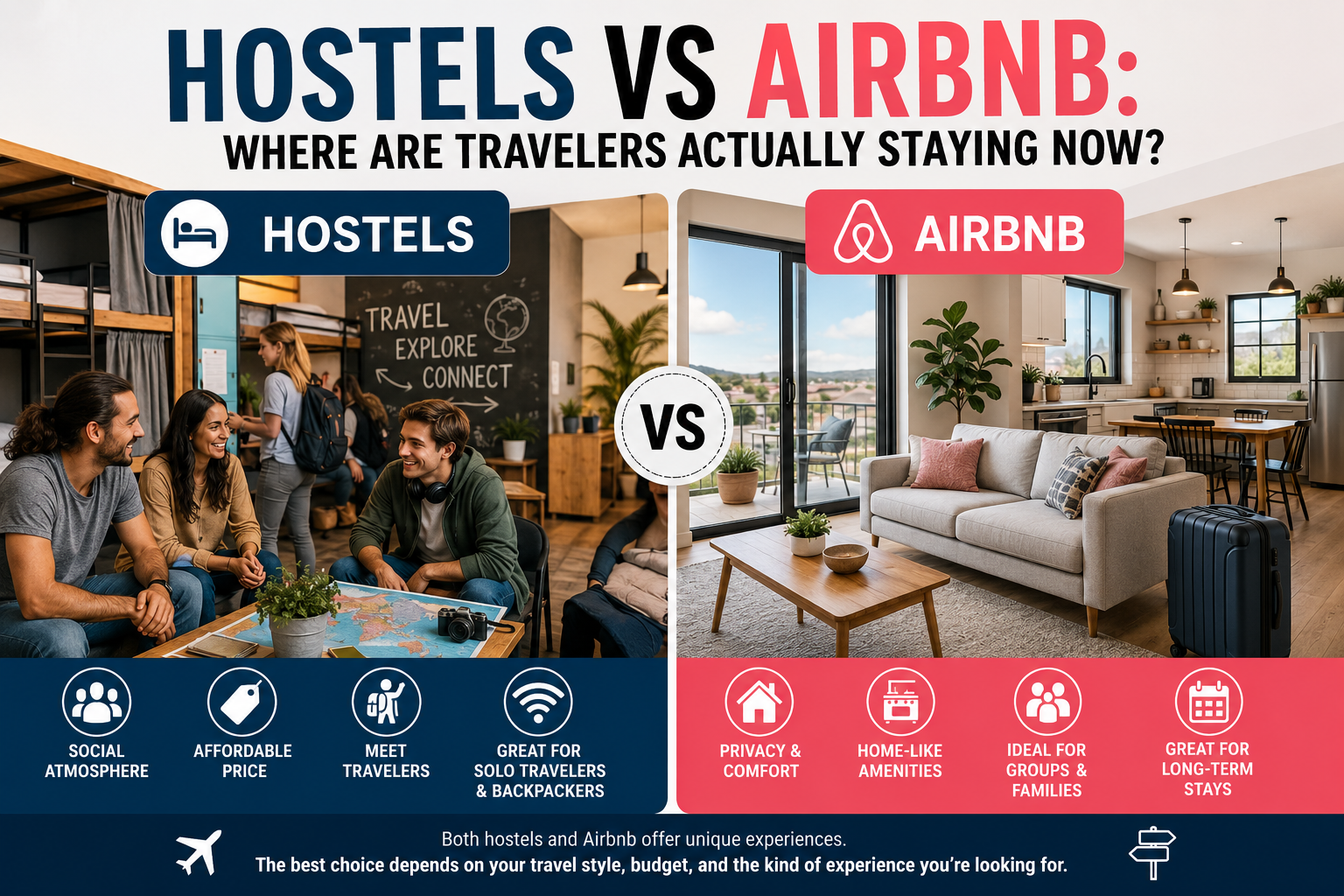
Hostels vs Airbnb: Where Are Travelers Actually Staying Now?
The accommodation landscape has shifted dramatically over the past decade. Once dominated by hostels for budget backpackers, the rise of Airbnb introduced a new way to travel—one centered on privacy, local immersion, and unique stays. But in 2026, where are travelers actually laying their heads at night? The answer reveals much about evolving priorities, generational preferences, and the future of travel.
The Rise of Experience-Focused Travel
Modern travelers increasingly prioritize experiences over luxury. Instead of spending heavily on accommodation, many prefer to invest in food, cultural activities, and authentic local encounters. This shift has allowed both hostels and Airbnb to thrive, each appealing to different needs.
Airbnb’s success lies in its diversity. Guests can book chic city lofts, countryside cottages, or even treehouses. The platform emphasizes privacy and individuality, offering entire homes that feel like a “home away from home.” For families, couples, and digital nomads, this flexibility is invaluable. Yet rising service fees and stricter regulations have made Airbnb less affordable than it once was, pushing some travelers back toward hostels.
Hostels, meanwhile, have evolved far beyond the stereotype of crowded dormitories. Many now feature private rooms, coworking spaces, wellness programs, and boutique-style interiors. This transformation has broadened their appeal to solo travelers, couples, and remote workers who value affordability without sacrificing comfort.
Why Travelers Choose Hostels
Hostels remain popular for several reasons:
Social connections: Shared dorms, common areas, and organized events foster friendships among strangers. Pub crawls, group dinners, and city tours often become highlights of the trip.
Affordability: Dorm beds are still cheaper than most Airbnb listings, especially in tourist hotspots. Rising travel costs make hostels an accessible option for budget-conscious explorers.
Flexibility: Many hostels allow last-minute bookings and cancellations, appealing to spontaneous travelers.
The rise of remote work has also boosted hostel demand. Reliable Wi-Fi, coworking spaces, and community events tailored to digital nomads make hostels increasingly attractive for long-term stays.
Why Airbnb Remains Strong
Despite challenges, Airbnb continues to attract millions of travelers worldwide:
Privacy: Families and groups often prefer entire properties where they can cook, relax, and enjoy independence.
Local immersion: Staying in residential neighborhoods allows guests to experience destinations from a resident’s perspective.
Variety: From luxury villas to quirky cabins, Airbnb caters to diverse tastes and budgets.
For long-term travelers, Airbnb’s access to kitchens, laundry facilities, and larger living spaces makes extended stays more comfortable.
Generational Preferences
Travel choices often reflect generational values:
Gen Z: Prioritize affordability and social experiences, making hostels appealing.
Millennials: Value unique, Instagram-worthy stays, leaning toward Airbnb.
Digital nomads: Seek reliable Wi-Fi and quiet workspaces, often choosing Airbnb or upgraded hostels with coworking facilities.
Sustainability and Ethics
Ethical considerations are shaping decisions too. Hostels often emphasize eco-friendly practices like recycling, communal kitchens, and shared resources. Airbnb, however, faces criticism for contributing to housing shortages in major cities. In response, it has introduced “Airbnb Green Stays” to highlight eco-conscious hosts. Travelers are increasingly aware of the impact their lodging choices have on local communities, and this awareness is influencing demand.
The Hybrid Future
The line between hostels and Airbnb is blurring. Some hostels now list private rooms on Airbnb, while Airbnb hosts adopt hostel-like features such as shared kitchens and community events. Hybrid models that combine affordability, privacy, and social connection may represent the future of travel accommodation.
Conclusion
So, where are travelers actually staying now? The answer depends on priorities. Budget-conscious backpackers still flock to hostels for community and cost savings, while Airbnb attracts those seeking privacy, unique stays, and local immersion. As both adapt to changing expectations, the competition is less about dominance and more about coexistence.
For travelers in 2026, the choice isn’t simply hostel vs Airbnb—it’s about finding the right balance between affordability, experience, and ethics. The most successful accommodations will be those that deliver authentic experiences, strong value, and meaningful connections. In the end, the real question is not where travelers sleep, but how they want to experience the world.

