
How smart hostel interior design creates better guest experiences, stronger reviews, and higher long-term revenue.
Walk through any successful hostel, and one detail quickly becomes apparent: the most memorable properties are rarely the ones with the greatest number of beds. Instead, they are the ones where guests sleep well, feel secure, and enjoy spaces designed with intention. In an increasingly competitive hospitality market, hostel founders face a difficult balancing act. Every additional bunk can increase potential revenue, yet overcrowding often leads to lower guest satisfaction, weaker online reviews, and declining occupancy over time.
This challenge has transformed hostel interior design from a purely aesthetic exercise into a strategic business decision. Around the world, operators are discovering that the optimal dorm layout is not necessarily the one that accommodates the highest number of guests. Rather, it is the layout that maximizes perceived value while preserving privacy, comfort, and operational efficiency.
Why Bed Density Is No Longer the Main Metric
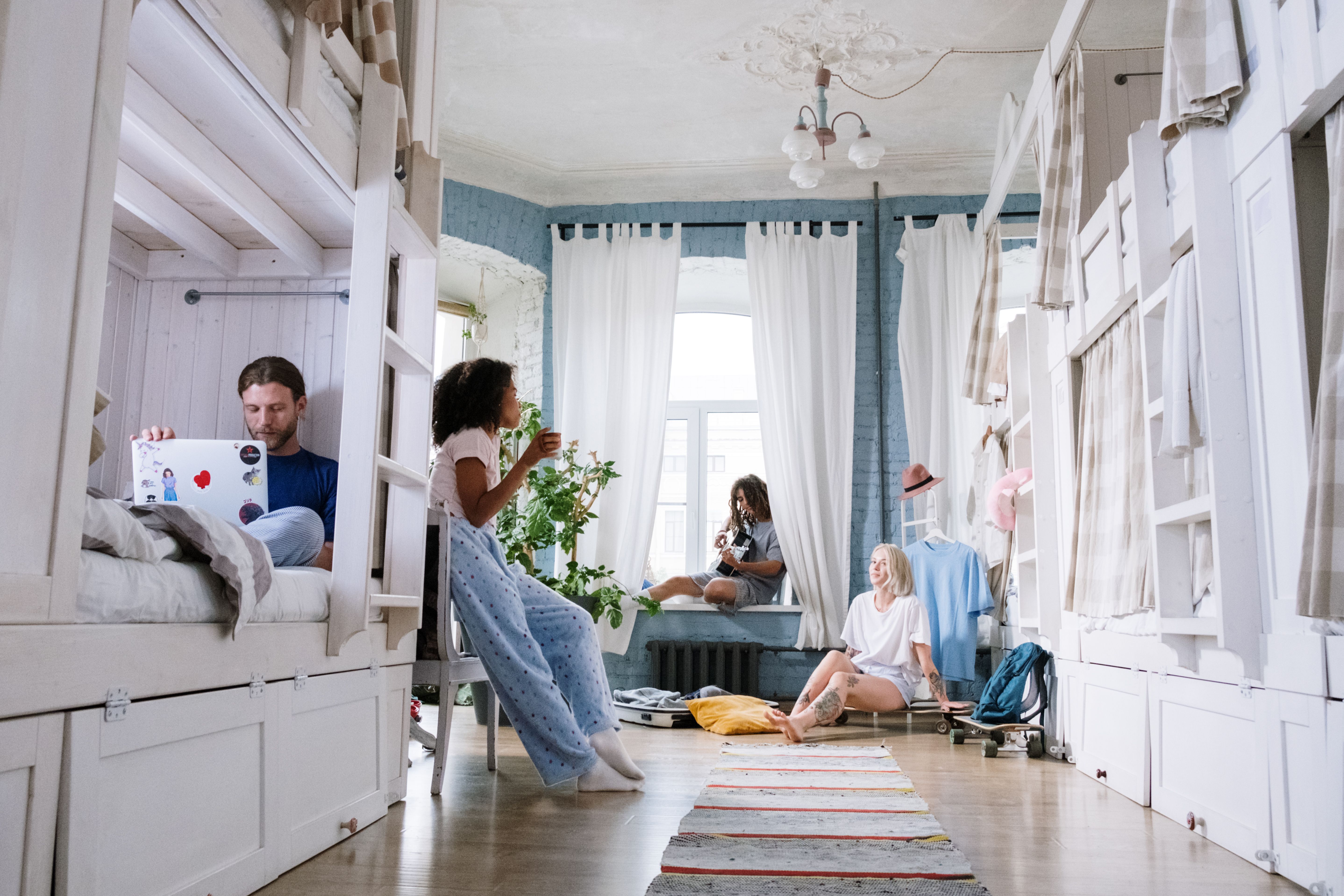
For decades, many hostel operators measured success by how many beds could fit into a room. While maximizing capacity can improve revenue during peak seasons, it often creates hidden costs. Noise increases, storage becomes inadequate, circulation is restricted, and guests report poorer sleep quality.
Research from the World Tourism Organization has consistently shown that modern travelers increasingly prioritize experience over price, particularly younger international travelers who make up a significant portion of the hostel market. Guest expectations have shifted from simply finding inexpensive accommodation to seeking social spaces that also provide personal comfort.
This change is reflected across major booking platforms, where reviews frequently mention sleep quality, room layout, privacy, and cleanliness as deciding factors. Properties that consistently earn high ratings often invest more in thoughtful spatial planning than simply adding more beds.
The Psychology Behind an Optimal Dorm Layout
Architecture influences behavior in ways many hostel founders underestimate. Environmental psychology has long demonstrated that crowded environments increase stress while reducing perceptions of safety and personal control.
In dormitories, this means every design decision matters. The positioning of beds, circulation paths, lighting, ceiling height, and storage all affect how guests perceive the room. Even when two dormitories contain the same number of beds, one can feel calm while another feels chaotic.
Design experts increasingly recommend arranging bunks to create natural visual separation instead of long military-style rows. Small offsets between beds, partial partitions, or carefully positioned lockers interrupt direct sightlines and provide a greater sense of personal territory without significantly reducing capacity.
The result is a dorm that feels less crowded despite maintaining similar occupancy levels.
Privacy Has Become a Premium Feature
Privacy no longer belongs exclusively to private rooms.
Many successful hostels now incorporate privacy curtains, integrated reading lights, charging outlets, personal shelves, and enclosed storage into every bunk. These relatively modest investments dramatically improve guest perception because they create a personal retreat within a shared environment.
Research published by the Cornell University School of Hotel Administration has repeatedly demonstrated that perceived privacy contributes significantly to guest satisfaction within shared accommodations. Travelers increasingly value having control over lighting, noise, and personal belongings, even when sharing a room with strangers.
For founders, this presents an important financial insight. Investing in better bunks often produces stronger guest reviews than increasing room capacity by one or two additional beds.
Designing for Movement Instead of Maximum Occupancy
One of the most common mistakes in hostel interior design is overlooking circulation.
Guests rarely notice generous walkways, but they immediately notice when they constantly bump into luggage, wait for others to pass, or struggle to reach lockers.
Good circulation reduces friction throughout the guest experience. Designers generally recommend leaving sufficient clearance around bunks so guests can comfortably climb into bed, organize luggage, and move through the room without disturbing others.
This also improves housekeeping efficiency. Staff can clean faster, inspect rooms more effectively, and maintain higher cleanliness standards, all of which influence online ratings.
Aesthetic Appeal Is a Business Investment
Hostels are increasingly competing on visual identity.
Social media has transformed interior design into a marketing asset. Rooms with warm lighting, natural materials, carefully selected color palettes, and thoughtful architectural details are more likely to appear in guest photographs shared on platforms such as Instagram and TikTok.
According to Booking.com Sustainable Travel Reports, travelers increasingly associate natural materials, daylight, and environmentally conscious design with higher-quality accommodations. These visual cues communicate comfort long before guests experience the property themselves.
Importantly, aesthetic appeal does not necessarily require expensive finishes. Exposed timber, durable textured surfaces, locally sourced artwork, indoor plants, and layered lighting often create stronger impressions than luxury materials alone.
Flexibility Creates Long-Term Profitability
One lesson emerging from recent hostel developments is the importance of adaptable design.
Travel demand changes throughout the year. Some seasons attract backpackers traveling alone, while others bring families, digital nomads, school groups, or remote workers.
Flexible dorm layouts allow operators to respond without extensive renovations. Modular furniture, movable partitions, convertible common areas, and mixed dorm configurations provide greater operational resilience while extending the property's useful life.
This flexibility also supports future accessibility improvements and evolving building regulations, reducing renovation costs over time.
Sustainability Strengthens Design Performance
Sustainable design is increasingly intertwined with profitability.
Natural ventilation, daylight optimization, energy-efficient lighting, durable finishes, and locally sourced materials reduce operating expenses while improving guest comfort.
The International Energy Agency has emphasized that efficient buildings consume significantly less energy throughout their operational life, making sustainable architectural choices financially advantageous as well as environmentally responsible.
Guests increasingly recognize these efforts. Many travelers actively seek accommodations that demonstrate responsible environmental practices, making sustainability another competitive advantage rather than simply an ethical consideration.
The Most Successful Dormitories Feel Spacious, Not Full
Perhaps the greatest misconception among first-time hostel founders is that revenue depends primarily on adding beds.
Experienced operators often discover the opposite. Rooms that feel spacious generate stronger reviews, encourage repeat visits, command slightly higher nightly rates, and reduce maintenance issues caused by overcrowding.
The most profitable hostel interiors rarely maximize every square meter. Instead, they maximize the quality of every square meter.
That distinction ultimately determines whether guests remember a hostel as simply affordable or genuinely exceptional.
Combining Human Experience with Design

Designing an optimal dorm layout requires balancing financial performance with human experience. Every design decision influences how guests sleep, interact, review the property, and recommend it to others. While maximizing bed density may increase short-term revenue, thoughtful hostel interior design that prioritizes privacy, circulation, aesthetics, and sustainability often delivers stronger long-term profitability.
For today's hostel founders, architecture is no longer just about fitting people into a room. It is about creating environments where guests feel comfortable enough to return and confident enough to recommend the experience to others.
Frequently Asked Questions
What is the optimal dorm layout for a hostel?
The optimal dorm layout balances bed capacity with guest comfort by providing adequate circulation space, personal storage, privacy features, and efficient access while maintaining an inviting atmosphere.
How can hostels increase privacy without reducing bed numbers?
Privacy curtains, integrated lighting, charging stations, strategically positioned bunks, partial dividers, and personal lockers can significantly improve guest privacy without substantially reducing room capacity.
Does better hostel interior design improve profitability?
Yes. Well-designed dormitories often receive higher guest ratings, encourage repeat bookings, justify premium pricing, reduce maintenance challenges, and improve operational efficiency, all of which contribute to stronger long-term profitability.
Recap
Successful hostel dorms are not defined by how many beds they contain but by how effectively they balance capacity with comfort. Thoughtful hostel interior design that emphasizes privacy, circulation, visual appeal, sustainability, and flexibility creates better guest experiences, stronger reviews, and more sustainable profits over time.
References
Booking.com. 2026. “Booking.Com’s Latest Travel and Sustainability Research Reveals Unexpected Generational Paradox.” In Booking.Com’s Latest Travel and Sustainability Research Reveals Unexpected Generational Paradox . Booking.com. https://news.booking.com/bookingcoms-latest-travel-and-sustainability-re....
International Energy Agency. 2023. “Buildings - Energy System.” In IEA. https://www.iea.org/energy-system/buildings.
Perdomo, Yolanda, and World Tourism Organization. 2016. Global Report on the Power of Youth Travel. World Tourism Organization (Unwto), March.

